E-commerce has moved far beyond a niche retail channel. Business e-commerce sales across 43 developed and developing economies reached approximately $27 trillion in 2022, and those economies represented around three-quarters of global GDP and exports, according to UNCTAD's e-commerce data. By 2024, business e-commerce sales across 45 economies reached $28 trillion, up 4.4% from 2023, as reported in UNCTAD's latest market overview.
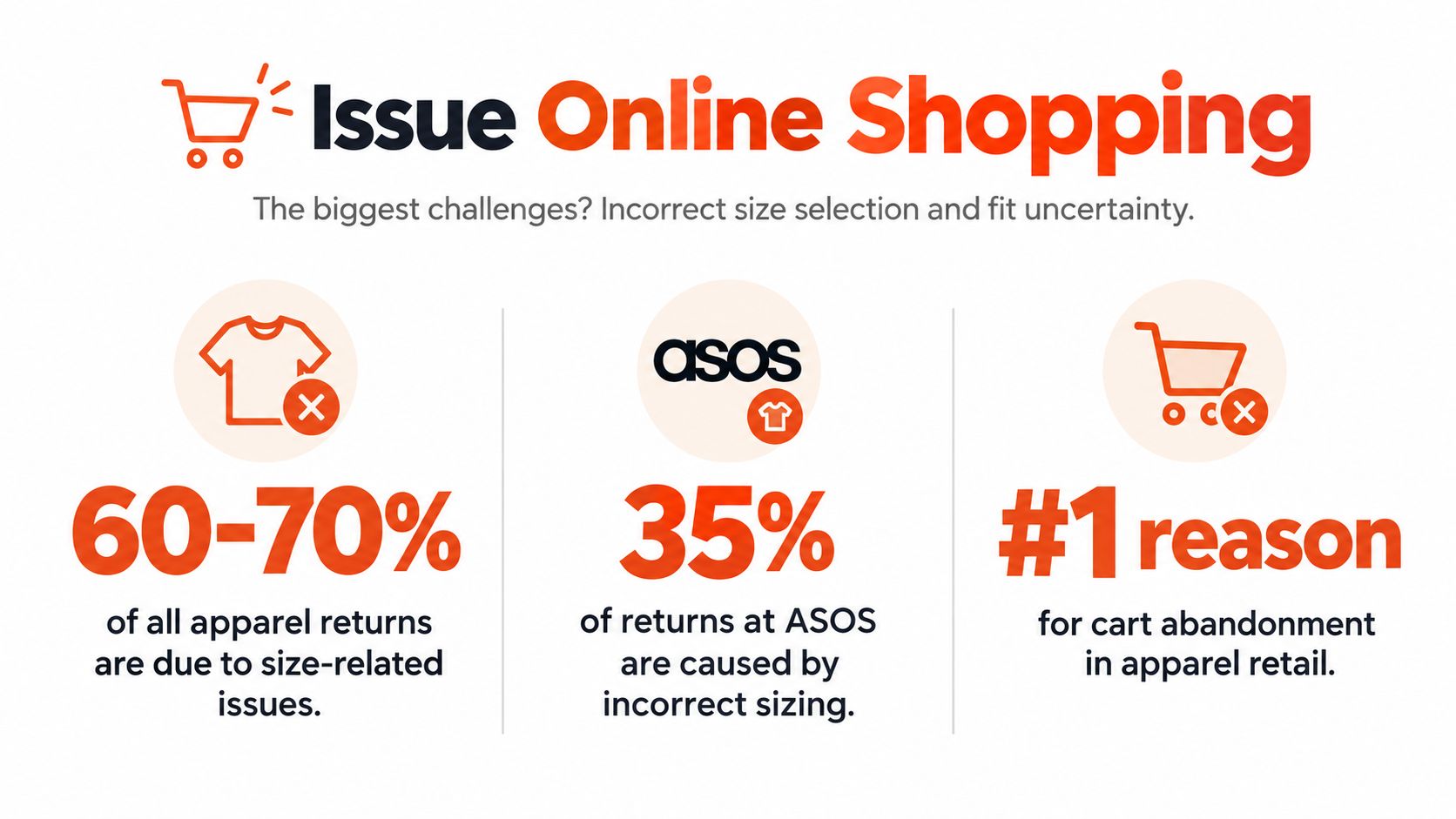
That scale makes every issue online shopping creates commercially important. In apparel, approximately 25% to 40% of orders are returned, while some individual products reach return rates as high as 75%. A multi-country study of 75,707 customers across 113 countries found that about 37.5% of ordered items were returned, and shoppers used a size-finder tool in only 7.3% of orders. The primary return reason was poor fit, according to the study on online apparel returns and size recommendations.
The problem often starts before checkout. This listicle maps eight issues across the shopper journey, separates visible symptoms from operational causes, and pairs each problem with practical interventions involving product content, mobile UX, data governance, analytics, and virtual fitting technology. Robosize is one relevant apparel example, particularly where garment-specific fit guidance can replace static charts, but no single tool fixes every online shopping problem.
Table of Contents
- 1. Incorrect Size Selection and Fit Uncertainty
- 2. High Return Rates from Size Mismatches
- 3. Cart Abandonment Due to Sizing Friction
- 4. Inconsistent Sizing Standards Across Brands and Categories
- 5. Limited Visual Fit Representation on Product Pages
- 6. Data Privacy and Body Measurement Concerns
- 7. Mobile Shopping Experience and Measurement Friction
- 8. Platform Integration Complexity and Implementation Barriers
- 8-Point Comparison: Online Shopping Fit & Sizing Challenges
- Turn Shopping Friction Into a Fixable Roadmap
1. Incorrect Size Selection and Fit Uncertainty
Which size will fit this body in this specific product? That question remains unresolved even when shoppers understand a garment's color, price, and style. Product pages cannot let customers assess tightness, length, stretch, shoulder placement, or waist position before payment. A generic size chart supplies measurements, but it does not reliably convert them into a purchase decision.
The operational cause is a mismatch between standardized labels and product-specific fit. “Medium” or “Size 10” can represent different measurements across brands, while the same shopper may prefer a different fit in denim, knitwear, or made-to-measure clothing. Poor fit then appears as a return or exchange, although the underlying failure occurred earlier, during product discovery.
Separate sizing tools also create friction. Earlier research found that shoppers used a size-finder tool in only 7.3% of orders, so retailers cannot assume customers will leave the product page, enter extensive measurements, and interpret the result without assistance. The measurable opportunity is to place fit guidance beside the selected variant, where it can influence the decision.
Replace size labels with garment-specific guidance
A useful product page connects shopper information with the item being viewed. The recommendation should account for the product's size chart, brand conventions, cut, stretch, and the customer's fit preference.
Practical interventions include:
- Show the recommendation on the product page: Keep the result beside the size selector so shoppers do not need to remember it while comparing variants.
- Offer a short questionnaire: Height, weight, age, body shape, fit preference, and comparable brand sizes can create a workable profile without demanding a long form.
- Keep selfies optional: Customers should receive guidance without uploading an image.
- Explain uncertainty: If a shopper falls between sizes or the garment has unusual stretch, state which factors affect the recommendation.
- Separate fit from appearance: Measurements may support a size choice, while styling, drape, and visual expectations still affect satisfaction.
Robosize can support this workflow through a questionnaire-based body model, optional selfie visualization, multi-angle rendering, and an individual-garment size recommendation. Retailers explaining the sizing problem can also link to this guide to choosing the right clothing size.
Practical rule: A size recommendation should explain “why this size for this product,” rather than repeat the shopper's measurements.
Measure the intervention through fitting-tool engagement, recommendation acceptance, conversion, size-related returns, exchanges, and repeat use. Segment results by category, device, brand, and customer group. An aggregate improvement can conceal weak performance in denim, dresses, or other categories where cut and stretch create greater uncertainty.
2. High Return Rates from Size Mismatches
For apparel retailers, a return is a fulfillment, inventory, merchandising, and forecasting event, not only a customer-service case. Reverse shipping, inspection, restocking, quality assessment, and renewed availability management all consume operational capacity. Bracketing adds another layer: when shoppers order several sizes for an at-home fitting session, the retailer temporarily carries demand that may not become a completed sale.
A 2025 industry synthesis reports that fit problems account for approximately 53% of apparel returns globally. It also reports that roughly 48% of online shoppers practice bracketing, buying multiple sizes or versions with the intention of returning unsuitable items. These figures come from the industry analysis of clothing return rates by category and country. The estimates vary by category and country, so retailers should establish their own baseline instead of adopting a universal target.
Start with SKU-level evidence. A storewide return rate cannot show which product-content or fit problem needs correction. Connect return reasons with individual SKUs, selected sizes, brands, and garment categories. Frequent “too small” returns call for a different response from repeated complaints about description or image mismatch.
The diagnostic work can follow the customer's order history and the product record. Compare the selected size with the recommended size, size chart, fit description, and stated return reason. Then check whether multi-size baskets cluster around particular garments or brands. Where confusion is concentrated, improve the relevant product content with model measurements, garment measurements, cut descriptions, stretch information, and fit notes.
Recommendation acceptance provides a useful test. Compare whether shoppers who accept a garment-specific recommendation create fewer multiple-size baskets, then examine effects on sellable stock, replenishment decisions, and product availability. Segmenting these results by category and brand can reveal trade-offs that a storewide result would hide.
Virtual fitting technology can support this workflow, but it cannot demonstrate that every return will disappear. Its output depends on accurate product imagery, size charts, inventory data, and garment attributes. If those inputs are wrong, a polished interface may make an incorrect recommendation more persuasive.
Track size-related returns per completed order, controlling for product mix and traffic source. Fitting-room usage shows interest, not operational improvement. Pair it with bracketing, recommendation acceptance, exchanges, and inventory availability to determine whether the intervention addresses the underlying return problem.
3. Cart Abandonment Due to Sizing Friction
Sizing friction can interrupt a purchase at the point of highest intent. A shopper has found a product, selected a color, and reached the variant control, then encounters a separate chart, measurement requests, or several brand-specific systems with no explanation of which applies. The resulting exit may be recorded as generic abandonment even though the operational cause is an unanswered size question.
Mobile amplifies that problem. Switching between tabs, measuring the body, and entering data can feel disproportionate to the purchase. The shopper may postpone the decision, visit another retailer, or choose an item with clearer guidance. Product content and interaction design therefore influence cart performance before checkout begins.
Put fit information beside the decision
A size recommendation should sit beside the size selector and remain available during cart review. A short, optional flow can collect only the information needed for an initial recommendation, while allowing shoppers who want more detail to refine the result. This placement reduces the work required to connect product information with a specific variant.
Useful tests include:
- Compare chart-only and guided flows: Measure size-tool engagement, recommendation acceptance, and completed orders.
- Place confidence near the variant selector: Explain the recommendation in context rather than requiring the customer to interpret a separate score.
- Offer a non-selfie route: A questionnaire or selected body model gives shoppers another way to provide fit information.
- Use abandonment analysis: Segment exits at the product page, size selection, cart, and checkout so different causes remain visible.
- Test fit-policy effects: Measure whether the policy changes conversion, exchanges, and returns, rather than treating it as a replacement for product information.
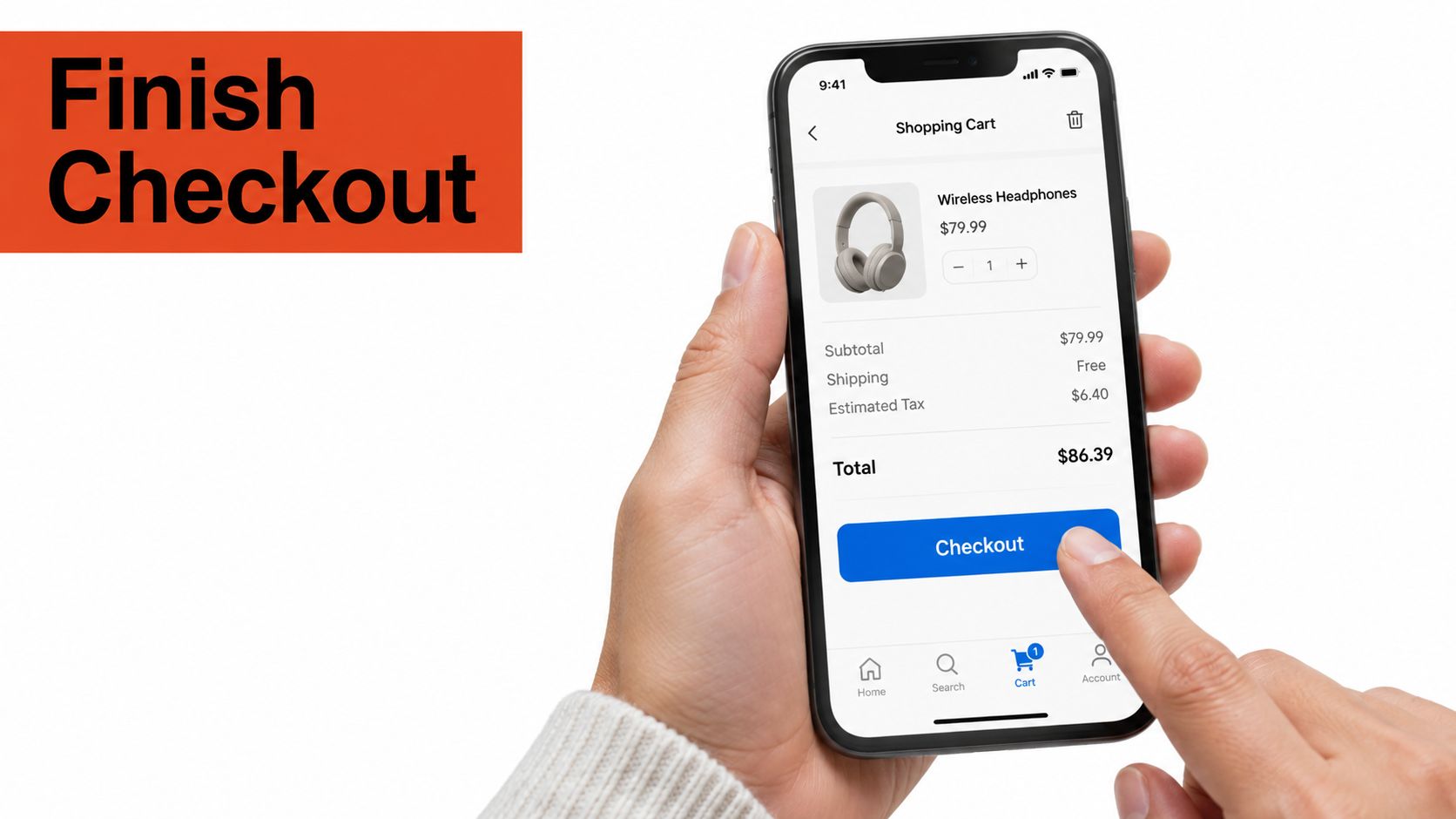
A Robosize questionnaire can begin the size-selection process, with the recommendation attached to the product and checkout experience. Retailers assessing Shopify tools can compare relevant options in this overview of Shopify clothing apps. The goal is to give shoppers a usable fit answer within the buying flow, rather than making them assemble one from scattered information.
Messaging interventions such as how FOMOchat helps reduce cart abandonment may address urgency, but they cannot resolve uncertainty about the selected size. Measure those prompts after the product decision is clear, and compare completed orders with returns and exchanges to identify whether they help or distract.
A faster checkout can't rescue a variant selection process that leaves the customer unsure what to buy.
4. Inconsistent Sizing Standards Across Brands and Categories
A size label describes a product only within its own context. Brand blocks, country systems, garment construction, intended silhouette, and the difference between fitted and oversized designs can all change what that label means in practice. In a multi-brand store, shoppers may move between charts without realizing that the same size carries a different fit expectation.
The operational cause is often incomplete product content. A retailer may publish a chart for each brand, yet fail to connect it clearly to the selected product and variant. Shoppers can follow the instructions and still receive a poor fit when measurements are outdated, missing, or attached to the wrong item.
Make sizing data specific to the product
A useful sizing layer connects every variant with its correct chart, unit system, garment measurements, cut, and fit notes. Marketplaces also need a normalization layer that translates brand-specific information into a recommendation while preserving differences between brands and categories. Standardization should clarify those differences, not erase them.
The product page should surface the following information at the point of selection:
- Variant-specific charts: Match the chart to color, cut, gender category, and product version when measurements differ.
- Brand notes beside the result: State whether a brand runs small, large, short, long, fitted, or oversized when the retailer has reliable evidence.
- Garment measurements: Show the item's dimensions where body measurements do not explain ease, structure, or drape.
- Customer correction signals: Let shoppers report inaccurate guidance and connect that feedback to the relevant SKU.
- Question tracking: Review repeated size questions before they become a larger return problem.
A recommendation engine should compare the shopper's profile with the data for each garment. Assigning one body category across an entire catalog hides product-level variation. Product-specific mapping also makes errors diagnosable. If shoppers repeatedly reject a recommendation for one SKU, the team can inspect its chart, construction, labeling, or product content instead of attributing the problem to customer choice.
The trade-off is ongoing data maintenance. Technology cannot resolve contradictory or missing measurements by itself. Merchandising, product information, and customer-service teams need a shared workflow for updating charts and fit notes.
Monitor recommendation corrections and size-related return reasons at SKU level. Prioritize products where clearer content can reduce uncertainty before adding more interface complexity. This connects the intervention to the wider shopping journey: better fit discovery should support variant selection, reduce avoidable returns, and produce clearer evidence about where the catalog still fails shoppers.
5. Limited Visual Fit Representation on Product Pages
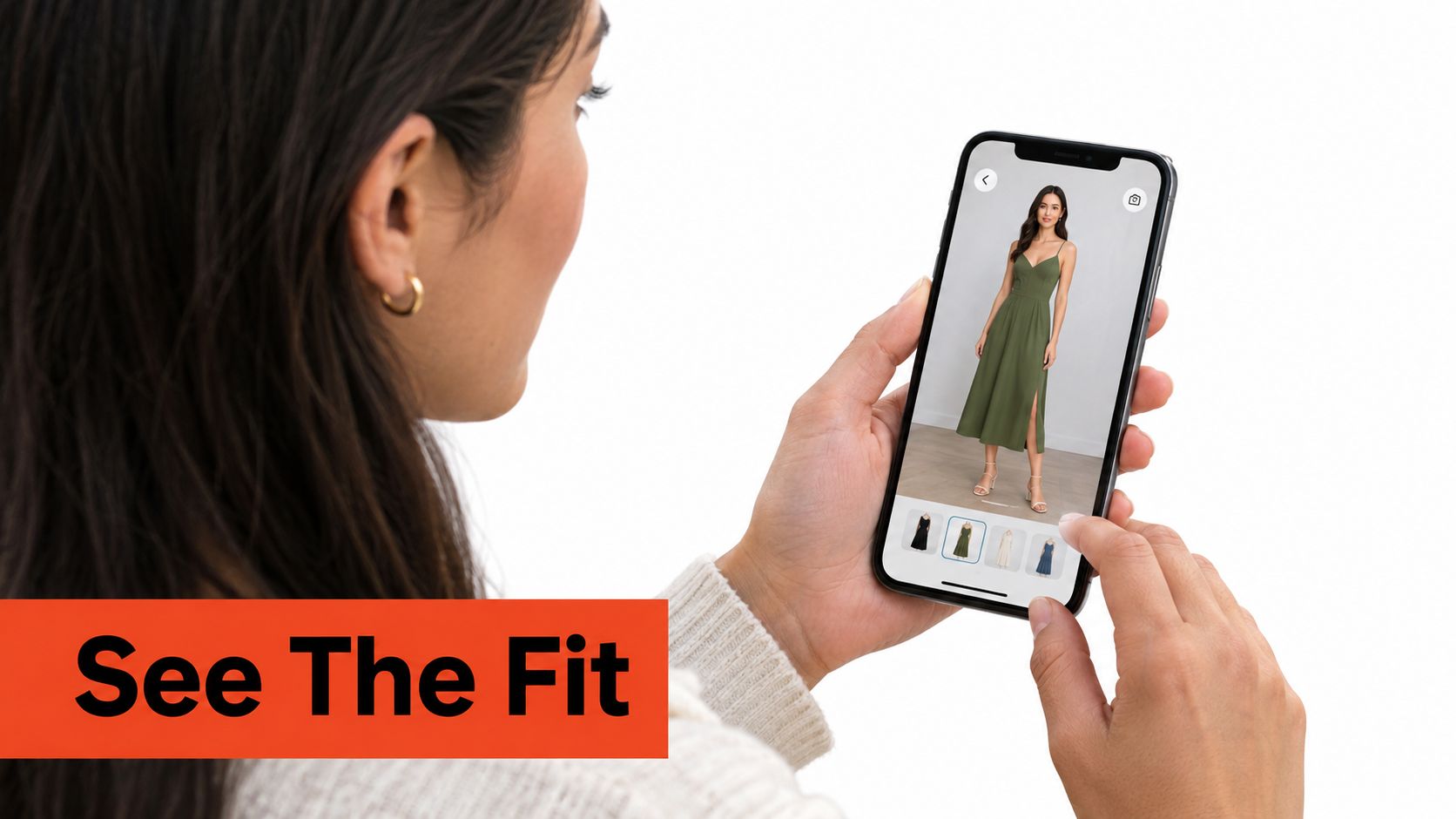
Measurements answer only part of the fit question. Shoppers also want to know whether a garment will look and feel right on their body. A single front-facing image can leave uncertainty about side proportions, back coverage, sleeve behavior, hem movement, fabric drape, and the resulting silhouette on a different body.
Return evidence shows why visual information matters. 61% of consumers who returned products cited poor fit, while 33% said the item did not match its online description or imagery. The same Rithum's global returns report found that 36% intentionally bought multiple sizes or versions to try at home. Size confidence and appearance confidence are related, yet they require different product-page evidence.
Build visual evidence around shopper questions
A stronger page lets shoppers inspect the garment from several perspectives. Combine model measurements, garment measurements, multiple poses, fabric close-ups, and direct fit descriptions. Each asset should answer a specific question, such as how the hem falls, whether the fabric clings, or how much structure the garment has.
Virtual try-on can provide another reference point when the rendered garment remains consistent with the available product imagery. Robosize supports optional selfie-based or model-based visualization and can render multiple viewpoints within a try-on session. That may clarify silhouette and proportions, while leaving uncertainty about fabric hand, temperature, weight, and movement. Written descriptions still need to cover those properties.
A product video can show movement and drape when it adds information rather than decoration. Retailers assessing production support can review product video production companies, then connect the brief to questions customers raise before returning an item.
Measure the intervention across the journey: Visual engagement shows which products receive try-on interaction. Recommendation behavior indicates whether shoppers accept the suggested size after viewing the garment. Return reasons can reveal whether size complaints decline while appearance mismatches persist. Category performance can show whether visualization works differently for structured garments and soft, highly elastic garments. Device performance confirms whether the experience remains usable on a phone.
The strongest page gives shoppers several ways to build confidence: measurements, written fit guidance, images, video, and optional visualization. Tracking their effect by product and device helps teams improve the right evidence before adding more interface complexity.
6. Data Privacy and Body Measurement Concerns
An AI fitting tool can require information that feels more personal than a color preference. Height, weight, age, body shape, fit preference, purchase history, and selfies may influence a recommendation. Customers need clear answers before sharing it: why each input is needed, whether an image is retained, whether body data supports another purpose, and how to delete their profile.
The available adoption evidence supports a selective approach rather than indiscriminate data collection. Emerging AI-shopping research reports that 69% of consumers would share at least some personal information for more personalized shopping, with clothing or shoe size the most acceptable category at 43%. The same AI shopping survey report identifies privacy concerns among 37% of non-users and accuracy concerns among 33%. The operational implication is clear: asking for more data may improve personalization, but it can also reduce trust before a recommendation is delivered.
Design the data exchange around control
Consent should appear where information is collected, not only inside a legal policy. A short explanation can state what the system uses now, what it stores, and which fields are optional. The interface should also offer a questionnaire or selected model for shoppers who do not want to submit a selfie.
Robosize's questionnaire and body-model approach is described in this resource on height, weight, and body models. Retailers still need to verify the exact storage, deletion, and reuse practices of their chosen implementation.
A usable privacy design should let customers:
- choose a no-selfie route;
- see whether data supports the current recommendation, a saved profile, service improvement, or another purpose;
- delete profile information and images without searching through account settings;
- correct measurements and fit preferences when the recommendation is wrong;
- receive an explanation when shopper or product data is insufficient;
- get guidance for between-size decisions, unusual cuts, and garments with substantial stretch.
These controls address distinct failure points. Unclear purpose creates hesitation. Inaccurate saved measurements create repeated recommendations that require correction. Missing fallback options exclude shoppers whose devices, circumstances, or preferences make image capture unsuitable.
Teams should measure privacy opt-in, fitting-tool completion, recommendation corrections, size acceptance, and size-related returns by shopper segment. Comparing those measures shows whether extra inputs improve decisions or merely increase collection. A high adoption rate alongside weak trust is not a durable result.
The strongest privacy experience gives shoppers control before asking them for confidence.
7. Mobile Shopping Experience and Measurement Friction
A mobile sizing flow needs its own design: a short path, clear progress, large controls, and a fallback when camera input is inconvenient. On a phone, camera angle, one-handed use, screen space, and network variability can turn a reasonable desktop process into a source of hesitation. Shoppers may leave the product page to check a size chart, scroll through measurement instructions, or enter data into fields too small for comfortable use.
Testing should cover ordinary devices, inconsistent connections, and different orientations. A fitting flow that works on a high-end phone may still fail when images load slowly, the camera view lags, or a shopper cannot hold the device at the required angle.
Design for quick completion without hiding detail
Start with a small set of profile questions and offer optional refinement afterward. As covered in the abandonment section, keep the recommendation beside the size selector. On mobile, ensure it survives page transitions without a re-render, so the shopper does not lose the result while reviewing the cart. If a fit preference changes the recommendation, explain the reason in the same flow.
Priorities include:
- Use camera hardware carefully: Offer selfie input as an option, not a gate. Provide manual entry or model selection when the camera is inconvenient.
- Keep initial entry short: Request the minimum information needed for a useful first recommendation, then allow further details.
- Keep results visible: Preserve the recommendation across product, cart, and checkout states instead of requiring the fitting room to reopen.
- Support familiar measurements: Let shoppers enter measurements in the units they already use, with conversion handled by the interface.
- Measure device-level behavior: Compare mobile and desktop engagement, recommendation acceptance, conversion, and completion.
- Watch rendering performance: Track load time, failed component loads, and unresponsive interactions alongside visual quality.
Robosize's mobile-oriented flow, optional selfie or model selection, and on-page recommendation represent one implementation route. The placement still matters. If the fitting experience appears only at checkout, it may arrive after uncertainty has already reduced product-page engagement.
Mobile analytics should identify the specific failure point. Low completion during body-profile entry can indicate form friction, camera difficulty, or privacy concerns. High completion followed by low recommendation acceptance can point to weak product data, unclear explanations, or limited visual confidence. These conditions require different interventions, so teams should segment results by device, connection quality, product category, and fitting method. A shorter flow may improve completion while reducing input detail, making recommendation quality and size-related returns necessary checks.
8. Platform Integration Complexity and Implementation Barriers
Sizing tools often fail at the seams between storefronts, catalog systems, and operational workflows. A retailer may run Shopify, WooCommerce, a custom frontend, marketplace feeds, analytics tools, and legacy product data at the same time. The fitting component must receive the correct product identifier, size chart, imagery, inventory state, and variant information. A missing field can turn a recommendation problem into a technical one.
The customer sees only the result. If the experience works on one product category but fails on another, or loads on desktop but not on mobile, sizing uncertainty returns at the point of choice. Staff face a second problem: without consistent event tracking, they cannot separate weak recommendation logic from incomplete catalog data, rendering failures, or a broken checkout path.
Use a narrow pilot with explicit failure handling
Start with one category that has clear return reasons, consistent product imagery, and enough traffic for useful observation. Before launch, audit each product's connection to its size chart, variants, imagery, and measurement units. Define what shoppers see when the fitting component does not load. A visible fallback, such as a standard size guide, prevents an integration error from becoming a dead end.
Set the pilot's operating rules before implementation. Integration route should match the storefront: a one-click Shopify app may reduce setup work for Shopify stores, while a JavaScript snippet can support other ecommerce platforms. Catalog ownership must be assigned so someone maintains chart mappings, product attributes, imagery, and units. Usage controls such as configurable session limits can help manage cost while the retailer learns how customers use the experience.
The interface also needs to belong to the storefront. Branding and appearance settings can prevent the component from appearing disconnected from the product page. Instrument the path from fitting-room open through profile completion, recommendation acceptance, size changes, purchase, and return reason. Assign separate owners for product data, privacy copy, technical monitoring, and customer-service escalation.
Robosize provides a Shopify app, a JavaScript route for other ecommerce platforms, product-to-chart matching, and analytics features. These options may reduce some deployment work, but they do not replace catalog governance, testing across templates and devices, or a documented fallback.
Implementation test: If the team cannot explain what happens when a product lacks reliable size data, the pilot is not ready.
Judge expansion by repeatable evidence. Compare the pilot category with a suitable baseline, review device- and product-level outcomes, and record the operational effort required to maintain the integration. Expand only when the retailer can reproduce the flow, explain its limitations, and connect the results to measurable shopper and business outcomes.
8-Point Comparison: Online Shopping Fit & Sizing Challenges
| Issue | Implementation Complexity (🔄) | Resource Requirements (⚡) | Expected Outcomes (📊) | Ideal Use Cases (💡) | Key Advantages (⭐) |
|---|---|---|---|---|---|
| Incorrect Size Selection and Fit Uncertainty | Low–Medium: questionnaire + optional selfie integration | Low: basic product data + optional photo processing | Reduces size uncertainty; reported +17% conversion, -7% returns | Product pages where sizing varies; marketplaces with diverse SKUs | Photorealistic fit on shopper's body; per‑garment size recommendations |
| High Return Rates from Size Mismatches | Medium: platform integration + staff training | Medium: analytics, returns dashboard, customer education | Lowers size-related returns (case studies: ~7% reduction); improves margins | Retailers with 25–40% apparel return rates | Fewer reverse logistics costs; better first‑fit accuracy |
| Cart Abandonment Due to Sizing Friction | Low: 2–3 click questionnaire or optional selfie path | Low: mobile UX, checkout placement, minimal dev work | Recovers ~10–15% abandoned carts; reduces checkout hesitation | Mobile-first stores and high-abandonment funnels | Quick profiling and instant size recommendation before checkout |
| Inconsistent Sizing Standards Across Brands and Categories | Medium: upload & maintain brand-specific charts | Medium: size chart management, normalization data | Standardizes fit guidance across catalog; reduces decision fatigue | Multi‑brand marketplaces and cross‑brand catalogs | Per‑garment and brand-aware recommendations; learns from feedback |
| Limited Visual Fit Representation on Product Pages | Medium–High: needs 3D models or high‑quality imagery | High: 3D assets or multi‑pose photography + rendering bandwidth | Improves confidence; case studies cite +17% conversion from visuals | Premium product pages where silhouette/drape matter | Multi‑angle photorealistic rendering on shopper's body |
| Data Privacy and Body Measurement Concerns | Medium: compliance and privacy‑first architecture | Medium–High: secure storage, encryption, legal resources | Builds trust and adoption; reduces compliance risk and fines | Regions with strict privacy laws (GDPR/CCPA) or privacy‑sensitive customers | Optional questionnaire/no photo storage by default; clear consent controls |
| Mobile Shopping Experience and Measurement Friction | Low–Medium: mobile‑first UI & camera integration | Low–Medium: camera APIs, optimized rendering for phones | Boosts mobile completion by ~15–25% when optimized | Stores with ≥60% mobile traffic or mobile‑first discovery channels | Quick‑capture selfie, touch‑optimized flows, session persistence |
| Platform Integration Complexity and Implementation Barriers | Low for Shopify (one‑click); Medium for custom platforms | Low–Medium: JS snippet or app install; some data mapping | Faster time‑to‑ROI for one‑click installs; pilotable on select categories | Mid‑market retailers lacking full dev teams; multi‑channel sellers | One‑click Shopify app + universal JS snippet for non‑Shopify sites |
Turn Shopping Friction Into a Fixable Roadmap
The eight issues form a sequence, not a collection of unrelated interface defects. Fit uncertainty begins with product and shopper data, appears as hesitation during size selection, becomes abandonment or bracketing, and later returns as reverse-logistics work and inventory disruption. Privacy, mobile usability, and integration determine whether a proposed fix is trusted and usable in the first place.
Start with diagnosis. Audit size-related abandonment, selected-size changes, multi-size baskets, exchanges, and return reasons by SKU and category. Separate wrong-size returns from description or imagery mismatch, quality complaints, preference changes, and other causes. This distinction matters because a better size recommender may address one category of failure while leaving visual expectation or garment quality untouched.
Next, repair the content layer. Confirm that every variant uses the correct size chart and unit system. Add garment measurements, model measurements, cut descriptions, stretch information, and product-specific fit notes where customer questions and returns show uncertainty. A technology layer cannot reliably compensate for incomplete or contradictory catalog data.
Then optimize the mobile path. Put the recommendation beside the size selector, keep the first interaction short, make the selfie optional, and preserve the result through cart and checkout. Test the flow by device, because an experience that works on desktop may still create measurement friction on a phone. Track not only clicks but also profile completion, recommendation acceptance, selected-size changes, and completed orders.
Privacy communication should follow the same product discipline. Tell shoppers which inputs are necessary, which are optional, how data is handled, whether a profile persists, and how to delete it. A no-selfie alternative can widen access, while transparent uncertainty messaging can protect trust when the system lacks enough information to make a strong recommendation.
Only then should the retailer pilot technology on a focused category. Robosize is one relevant option for apparel stores that want a questionnaire-based body model, optional selfie visualization, garment-specific recommendations, and integrations through Shopify or JavaScript. The pilot should measure:
- Fitting-room engagement: Do shoppers open and complete the experience?
- Recommendation acceptance: Do they keep the suggested size?
- Conversion: Does the flow support completed purchases without adding hesitation?
- Average order value: Does improved confidence affect basket composition?
- Return reasons: Are size-related returns changing independently from imagery mismatch?
- Device-level completion: Does the experience work equally well across mobile and desktop?
- Correction behavior: How often do shoppers override or revise the recommendation?
These metrics should be reviewed by product, category, brand, device, and shopper segment. An aggregate result can hide a problem with one garment family or one technical environment. The goal isn't to add technology because online shopping feels difficult. It's to connect a specific shopper symptom to its operational cause, test a proportionate intervention, and retain only what improves the experience without creating a new source of friction.
Better online shopping combines accurate product data, low-friction UX, transparent trust signals, and technology that fits the retailer's platform. When those elements work together, shoppers get clearer answers before purchase and retailers gain a more useful path for reducing avoidable uncertainty.
Robosize provides an AI virtual fitting room for apparel retailers, combining a short shopper questionnaire, optional selfie or model-based visualization, and garment-specific size recommendations on the product page. Visit Robosize to explore an approach that connects fit guidance, virtual try-on, mobile shopping, and platform integration.