You're probably here because your usual jeans size just failed you. Maybe you ordered your normal waist size online, the tag looked right, and the jeans still pinched at the hips, sagged at the seat, or stopped an inch too high on your ankle.
That isn't you misreading your body. It's the system. Jeans labels look simple, but fit depends on more than one number, and the place you should measure changes with the rise of the jean. If you want to know how to know what size jeans you are, stop treating the tag as truth and start treating it as a rough starting point.
Table of Contents
- Why Your Jeans Size Feels Different Everywhere You Shop
- How to Measure Yourself Accurately for Jeans
- How to Match Your Measurements to Any Size Chart
- How Different Jeans Fits Change Your Ideal Size
- Troubleshooting Common Jeans Fit Problems
- Find Your Best Jeans Size With Confidence Every Time
Why Your Jeans Size Feels Different Everywhere You Shop
A shopper buys one pair marked 32 x 32 and likes the fit. Then they order another 32 x 32 from a different brand, and suddenly the waistband feels tighter, the thigh is narrower, or the rise sits in a completely different place. That's the most common jeans complaint I hear, and it has a straightforward cause. The label is not the full fit.
Historically, U.S. apparel sizing wasn't built from one universal body-to-label rule. The National Bureau of Standards created early body-dimension standards in the 1950s, those voluntary standards were withdrawn in 1983, and ASTM later carried the sizing framework forward. ASTM's men's body-measurement standard D6240 covered men from size 34 to 60, which shows that sizing has long been handled as standardized ranges rather than one exact formula for every body and every garment type (ASTM D6240 reference).
That history still shows up on the sales floor and on product pages. ASTM terminology also separates body measurements from garment dimensions, while common jeans sizing still uses a two-number waist and inseam format such as 31, 32, 34, 36, 38, 40, 42, and 44 for waist, with inseams often offered in 30, 32, and 34. A 32 x 32 tells you only part of the story. It doesn't tell you the rise, hip shape, thigh room, or how the brand drafted the seat (ASTM D5219 reference).
Practical rule: A jeans tag is a shortcut, not a measurement report.
That's why a reliable fit process starts with two things most shoppers skip. First, measure your body at the point where that specific rise will sit. Second, compare those numbers to the garment's actual measurements, not just the size label.
Once you do that, the inconsistency starts making sense. A high-rise straight jean and a low-rise skinny jean can require different measuring points on the same body. Same person. Different fit logic.
How to Measure Yourself Accurately for Jeans
If you want clean sizing decisions, measure with purpose. Don't guess. Don't suck in. Don't measure over a hoodie or thick sweater. Use a soft tape, wear fitted clothing or underwear, and stand naturally with your feet about hip-width apart.
A lot of bad jean sizing starts with bad tape handling. If you need a refresher on using a measuring tape correctly, review that before you start. It'll help you avoid the usual mistakes like twisting the tape, angling it, or pulling it tighter than you would ever wear denim.
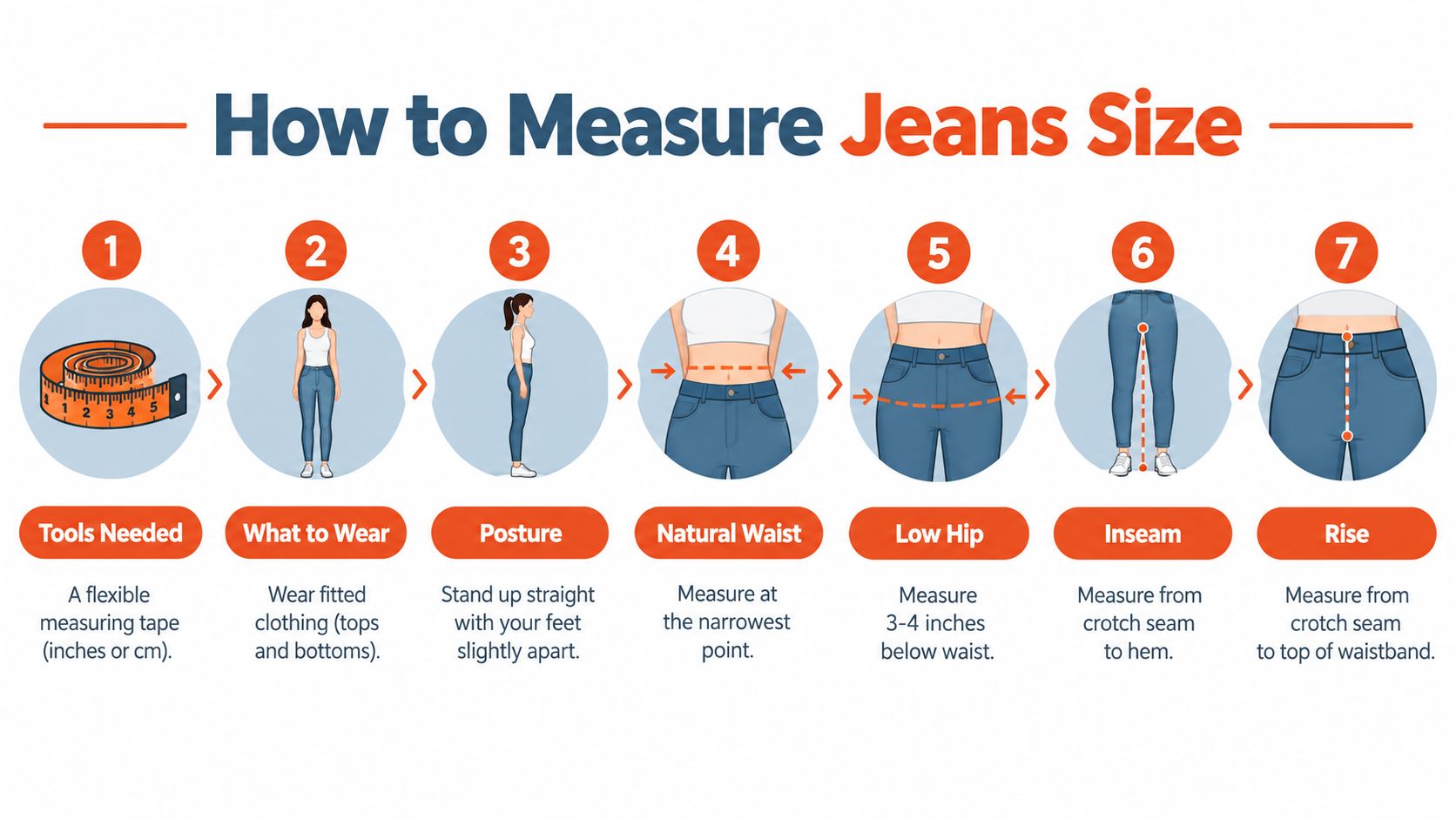
Measure the body points that actually affect jeans fit
These are the numbers I tell shoppers to keep saved in their phone notes:
Natural waist
Measure at the narrowest part of your torso, usually above the navel. Keep the tape level all the way around. This matters most for mid-rise and high-rise jeans.Low hip
Measure around the fullest part of the hip and seat. This is the number people skip, then wonder why low-rise jeans won't close or feel wrong through the front pocket area.Inseam
Measure from the crotch point down the inside leg to where you want the hem to end. If you wear different shoes with different jeans, note both a cleaner ankle length and a longer stacked length.Rise reference
Rise is technically a garment measurement, not a body circumference, but you still need to know where the waistband will sit on you. That tells you whether the waist or the hip should drive your size choice.Thigh
Measure around the fullest part of the upper thigh. This matters more than shoppers think, especially in slim, skinny, or tapered jeans.
Low-rise jeans often need to be sized from the hips, while regular jeans are usually sized from the waist. If you use the wrong body point, the tag size can look correct and still fit badly (Size.ly jeans measuring guidance).
Match the measuring point to the rise
This is the part most size guides leave out.
For high-rise jeans, your critical fit point is usually closer to the natural waist. If the waistband sits high, a hip-based guess can leave the waist too loose or the rise too tight.
For mid-rise jeans, waist and upper hip both matter. These are usually the easiest to fit, but only if the product page gives enough detail to show where the waistband lands.
For low-rise jeans, stop relying on your natural waist. The waistband sits lower, so the hip becomes the deciding measurement much more often than the waist. That's why someone can wear one size in high-rise denim and a different size in low-rise without either size being “wrong.”
Use a favorite pair as a second baseline
If body measuring feels abstract, pull out the jeans that fit you best and measure those flat. Compare the waistband, front rise, back rise, thigh, inseam, and leg opening to the next pair you want to buy. In practice, this is often faster and more accurate than trying to remember what your last tag size was.
ASOS's jeans and pants size guidance also recommends checking waist, low hip, and inseam in inches or centimeters rather than relying on the tag alone, and notes practical benchmarks like 32W typically meaning a 32-inch waist with short, regular, and long inseams often running 30, 32, and 34 inches (ASOS men's jeans and pants size charts).
If you want a broader body-measuring walkthrough before you shop, this guide on taking your own measurements accurately is a useful reference.
How to Match Your Measurements to Any Size Chart
Knowing your numbers is only half the job. The other half is reading the chart without letting the tag talk you into the wrong pair.
When a jean is labeled 32 x 32, the first number usually refers to waist and the second to inseam. That sounds simple, but the label doesn't tell you whether the jean has extra room at the hip, a short rise, or a narrow thigh. That's why I always trust the product-page measurement chart over the tag.
Read the chart in the right order
Don't start with the brand's generic size converter. Start with the garment page for the exact jean.
| Your Measurement | What to Check on Chart | How to Choose |
|---|---|---|
| Waist | Garment waist and where the rise sits | If it's high-rise, prioritize a waist match. If it's low-rise, don't let waist alone decide. |
| Low hip | Hip or seat measurement | If the jean sits lower, use this to prevent pulling or a too-tight front closure. |
| Inseam | Offered length options | Choose by hem preference, not by habit. Short, regular, and long can change the whole look. |
| Thigh | Thigh width or upper-leg measurement | Critical for slim and tapered cuts. If this is tight on paper, the jean will usually feel tighter in real life. |
| Rise | Front rise measurement | Use this to judge where the waistband will land on your body. |
| Leg opening | Hem width | Helps predict whether the jean will stack, taper, or sit clean over footwear. |
What works and what doesn't
What works is comparing your body measurements, or your best-fitting jeans, to the actual garment chart.
What doesn't work is assuming all brands draft the same way because the waist number matches.
Industry return data shows why this matters. Apparel return rates are often summarized around 20% to 35%, and broader fashion return reporting often attributes about 67% of returns to fit or size issues, with some research citing roughly 70% of fashion returns as sizing-related (apparel return rate and sizing summary). Jeans are one of the clearest examples because a tagged waist can still fail at the rise, hip, thigh, or inseam.
The fastest way to reduce guesswork is to compare the new jean against the pair you already reach for most.
If you shop across regions, be cautious with conversion charts. Numeric denim sizing isn't standardized across brands and markets, which is why retailers keep publishing UK, EU, and US conversions side by side. If you need a quick reference, a clothing size conversion chart across regions can help, but it should stay secondary to the actual garment measurements.
How Different Jeans Fits Change Your Ideal Size
A lot of shoppers think sizing should stay constant if the waist number stays constant. In real denim fitting, that's rarely how it works. Cut changes your size needs, even before fabric stretch enters the conversation.
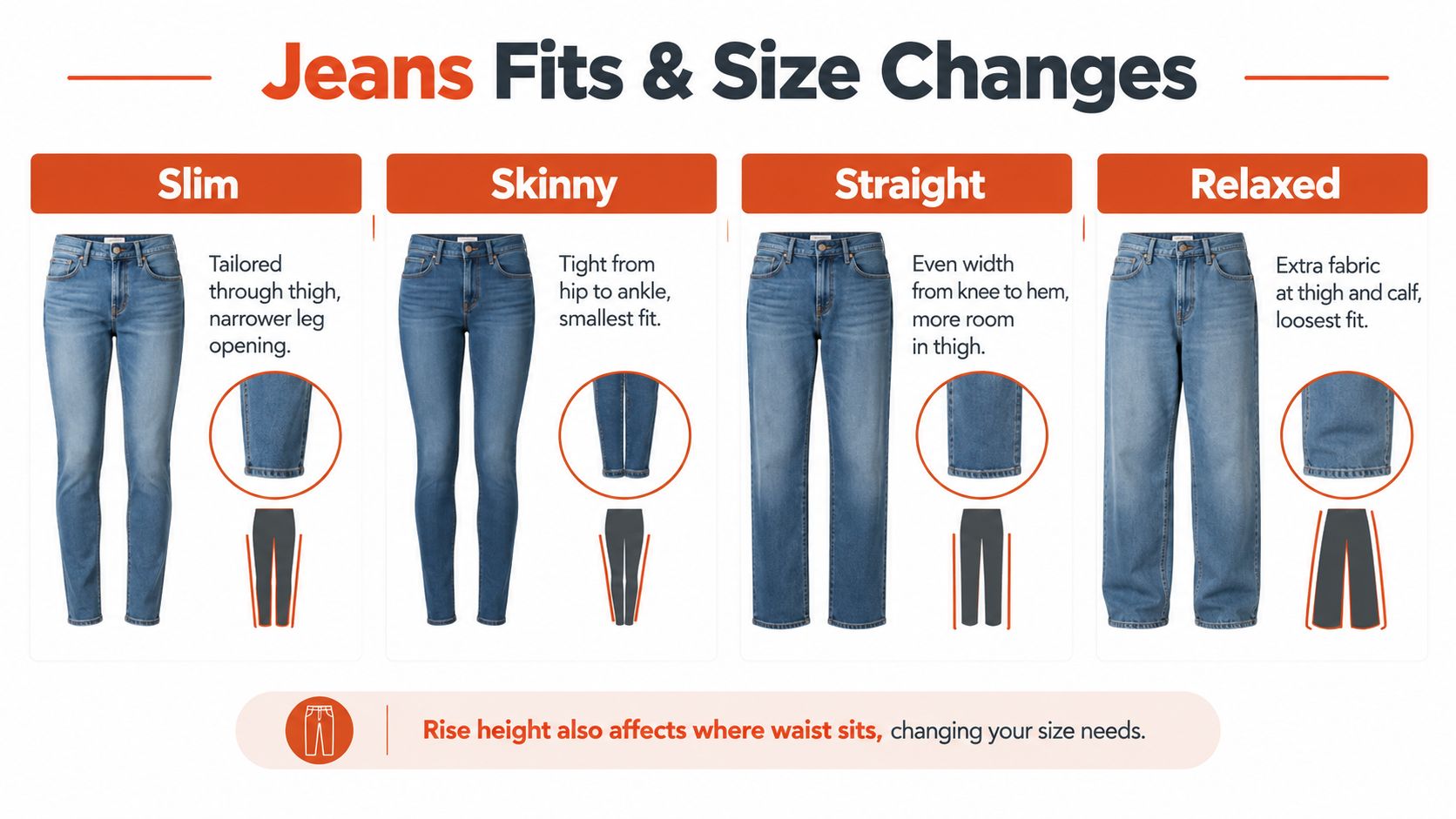
Slim and skinny fits
Slim jeans reduce room through the thigh and lower leg. Skinny jeans go further and stay close from hip to ankle. In both cuts, the waist tag can match and still feel wrong because the restriction often starts at the thigh, knee, or calf.
For these fits, I check three things first: rise, thigh, and fabric behavior. If the rise is short and the thigh is narrow, the shopper often blames the waist when the actual problem is lower in the pattern.
Straight and relaxed fits
Straight jeans usually hold a cleaner line from knee to hem and give more breathing room through the leg than slim or skinny shapes. Relaxed fits add space through the seat, thigh, or calf, sometimes all three.
These cuts forgive small measurement differences better. They're often the easiest place to stay close to your usual size, especially if your body carries more shape in the hip or upper leg.
Why rise changes the whole decision
Rise is the quiet variable behind a lot of “same size, different fit” complaints. A higher rise shifts the waistband upward toward the natural waist. A lower rise drops the critical fit point closer to the hips.
That's why one person can wear a smaller size in a higher rise and a larger size in a lower rise, or the reverse, depending on body shape and the brand's pattern. The size didn't become inconsistent. The measuring point changed.
One more wrinkle is market variation. Size guidance often says jeans numbers track waist inches, but cross-market conversion still causes friction, and a 2026 UK fit report found jeans were the worst-fitting clothing item to buy online, with 47% flagged as problematic (C&A jeans size guide with market-fit context). That lines up with what fit specialists see every day. The cut and the market label can both shift the answer.
Troubleshooting Common Jeans Fit Problems
Most jean fit problems come from the wrong dimension winning the decision. The shopper buys for waist, but the issue is the rise. Or they size up for the thigh and create a loose seat they didn't want.
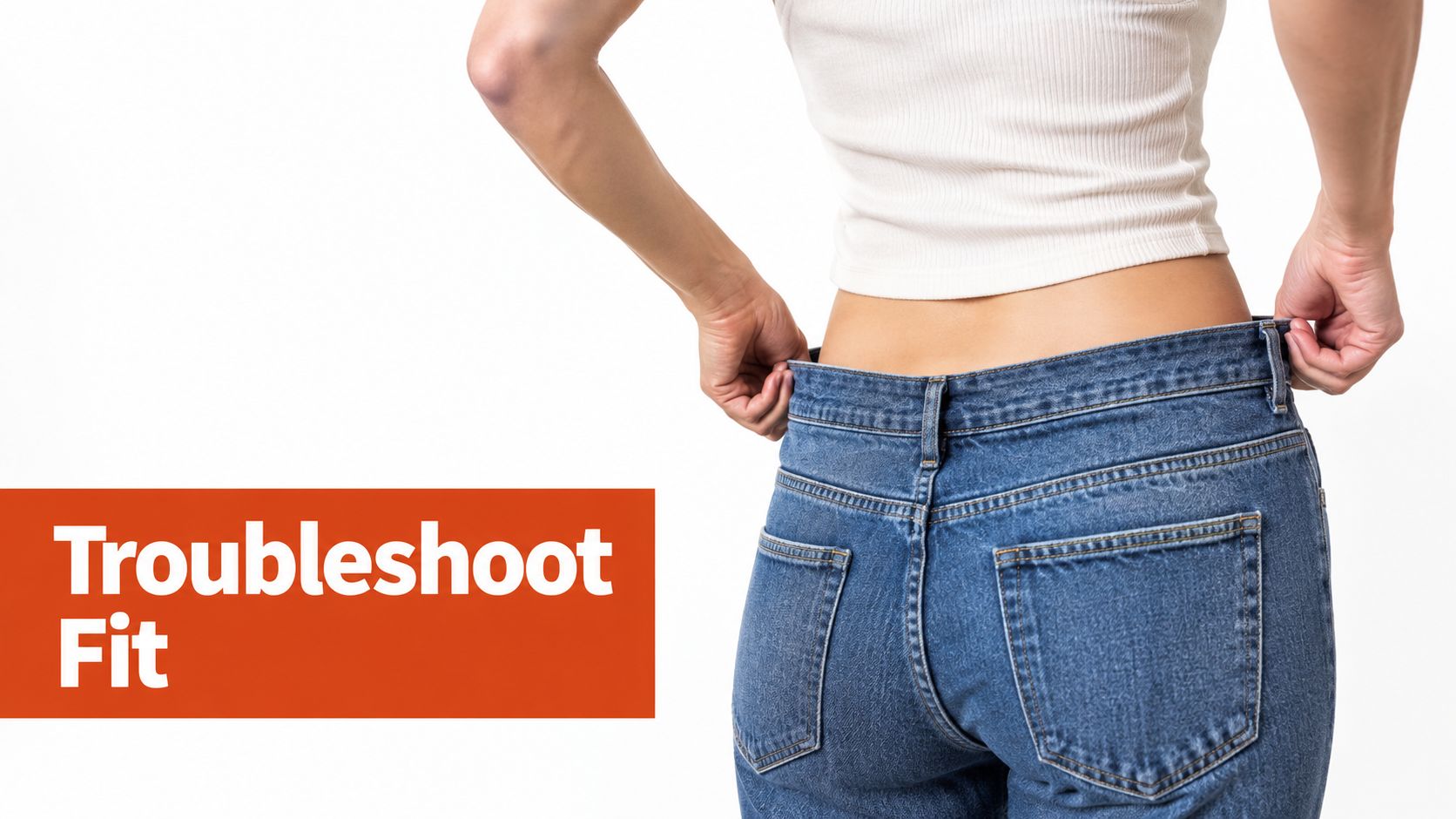
Waist gaps but hips fit
This usually means the jean is cut too straight for your shape, or the rise is landing higher than your body wants. Don't automatically size down. A smaller size may fix the waist and create drag lines across the front or stress at the fly.
Try a curvier cut, a different rise, or a brand with more seat shaping. If the waist gap is small and the rest is right, tailoring is often cleaner than chasing another tagged size.
Thighs feel tight even though the waist closes
That's a cut problem, not a waistband problem. Tapered, slim, and skinny jeans can all do this.
Check the thigh measurement before you reorder. If the brand doesn't publish it, that's already a warning sign for anyone with athletic legs or a fuller upper thigh. Move to a straight or relaxed cut if comfort matters more than a close silhouette.
If the waist works and the thigh doesn't, changing the cut usually solves more than changing the size.
Inseam puddles or comes up short
Shoppers often try to fix length with waist size. That almost never ends well.
Treat inseam as its own choice. If the jean comes in short, regular, or long, pick the length that suits the shoe and the break you want. If the brand only offers one inseam, ask yourself whether you're willing to hem it before you order.
A quick visual example can help if you're unsure what to watch for in motion and stance:
Rise digs in or sags
If the front digs when you sit, the rise may be too short or the waistband may be sitting lower than the pattern expects. If the seat sags, the rise may be too long for your torso, or the cut may carry too much room through the upper block.
Trying to force one familiar size across every rise goes wrong. High-rise, mid-rise, and low-rise jeans don't ask the same thing from the same body.
Same waist label, different result across brands
That's common. It's also one reason online denim is hard to buy. Product testing and fit guidance repeatedly show that tag equivalence isn't dependable enough on its own, so the fix is procedural. Save your own measurements, save the dimensions of your best pair, and compare every new jean against those before checkout.
Find Your Best Jeans Size With Confidence Every Time
The cleanest way to answer how to know what size jeans you are is to stop asking for one permanent number. Start asking a better question: what size am I in this rise, this cut, and this brand?
A repeatable process works better than memory. Measure your body at the point where the jean will sit. Check low hip if the rise is lower. Confirm inseam based on the look you want, not just what you bought last time. Then compare those numbers to the exact product chart, with extra attention on rise and thigh.
Keep your best-fitting jeans nearby when you shop online. Their measurements are often more useful than your last tag size. And if you don't want to do every comparison by hand, tools that give product-specific guidance can shorten the process. For shoppers who want a digital shortcut, virtual try-on and fit guidance tools can help narrow the right size before you buy. Robosize is one example. It uses shopper inputs to generate a product-page size recommendation and virtual try-on view for that specific item.
Trust measured data over tag memory. That one shift is what turns jean shopping from random trial and error into a system you can reuse every time.
If you're tired of second-guessing jeans sizes, Robosize gives shoppers a garment-specific size recommendation and a virtual try-on view directly on the product page. It's a practical way to bridge the gap between body measurements, rise differences, and the reality that the same tagged waist can fit very differently from one pair to the next.