Height and weight give you a starting jacket chest size, not a final suit size; use the chart below to choose an initial size, then confirm it with your chest and shoulder measurements. The popular advice to enter your details and trust the result skips the part that matters most: whether the jacket fits your frame.
A calculator can't see where you carry your weight, how your shoulders slope, or whether your torso is long relative to your legs. A useful estimate narrows your options without pretending those differences don't exist.
Table of Contents
- Starting Suit Size by Height and Weight
- Why Height and Weight Miss Suit Fit
- How to Run the Estimate Step by Step
- Measurements That Close the Gap
- Common Suit Fit Problems and How to Fix Them
- When Weight Changes and the Size Goes Stale
- Choose the Size and Order With Confidence
Starting Suit Size by Height and Weight
Use this chart as an illustrative starting framework for a standard cut, not a validated height-to-weight formula. Find your height band, read across to the starting chest size, and treat the length category as something to check against the retailer's chart.
The numerical pairings below are examples for comparison, not established sizing rules. Where there's no verified weight band, use height and measured chest, rather than filling the gap with a guess.
| Height | Typical weight | Starting chest size | Length category |
|---|---|---|---|
| 5 ft 4 in to 5 ft 6 in (163-168 cm) | Not established; use measured chest | 36, illustrative | Short |
| 5 ft 6 in to 5 ft 9 in (168-175 cm) | Not established; use measured chest | 38, illustrative | Regular |
| 5 ft 9 in to 5 ft 11 in (175-180 cm) | Not established; use measured chest | 40, illustrative | Regular |
| 5 ft 11 in to 6 ft 1 in (180-185 cm) | Example only: 180-205 lb (82-93 kg) | 42, illustrative | Regular |
| 6 ft 1 in to 6 ft 3 in (185-191 cm) | Example only: 200-230 lb (91-104 kg) | 44, illustrative | Long |
| Over 6 ft 3 in (191 cm) | Example only: 220 lb (100 kg) and up | 46, illustrative | Long |
Chest is the anchor number, while height helps you consider jacket length. Weight can nudge an estimate toward a fuller or slimmer build, but it doesn't tell you which part of the body needs that room.
For context, FashioLabs attributes to the CDC National Center for Health Statistics an average US male height of 68.9 inches and average weight of 199.0 pounds among adults aged 20 and older measured during 2021–2023. Those averages describe a population, not a suit size. You shouldn't combine them to assign every average-height shopper the same jacket.
Read length separately from width
A longer jacket isn't a roomier jacket. Its proportions, including sleeve length and button placement, can differ from those of a shorter version.
Graduation clothing provides a useful contrast: Graduation Cap and Gown's cap and gown size chart is a garment-specific reference, not a substitute for a suit chart. Always use the chart designed for the clothing you're buying.
Practical rule: If your height and weight suggest different rows, keep a size range open. Let your measurements resolve it rather than forcing yourself into a single chart cell.
Why Height and Weight Miss Suit Fit
A clothing-size comparison described in The Black Tux's sizing guidance found 89.66% accuracy using key body measurements, compared with 51.72% using height and weight alone. That's a result from a particular comparison, not an accuracy promise for every suit calculator, but it illustrates why extra measurements matter.
Consider men with identical height and weight. One has broad shoulders and a fuller chest; the other has narrower shoulders and carries more weight around his middle. A calculator receiving only their height and weight has no way to distinguish those proportions.
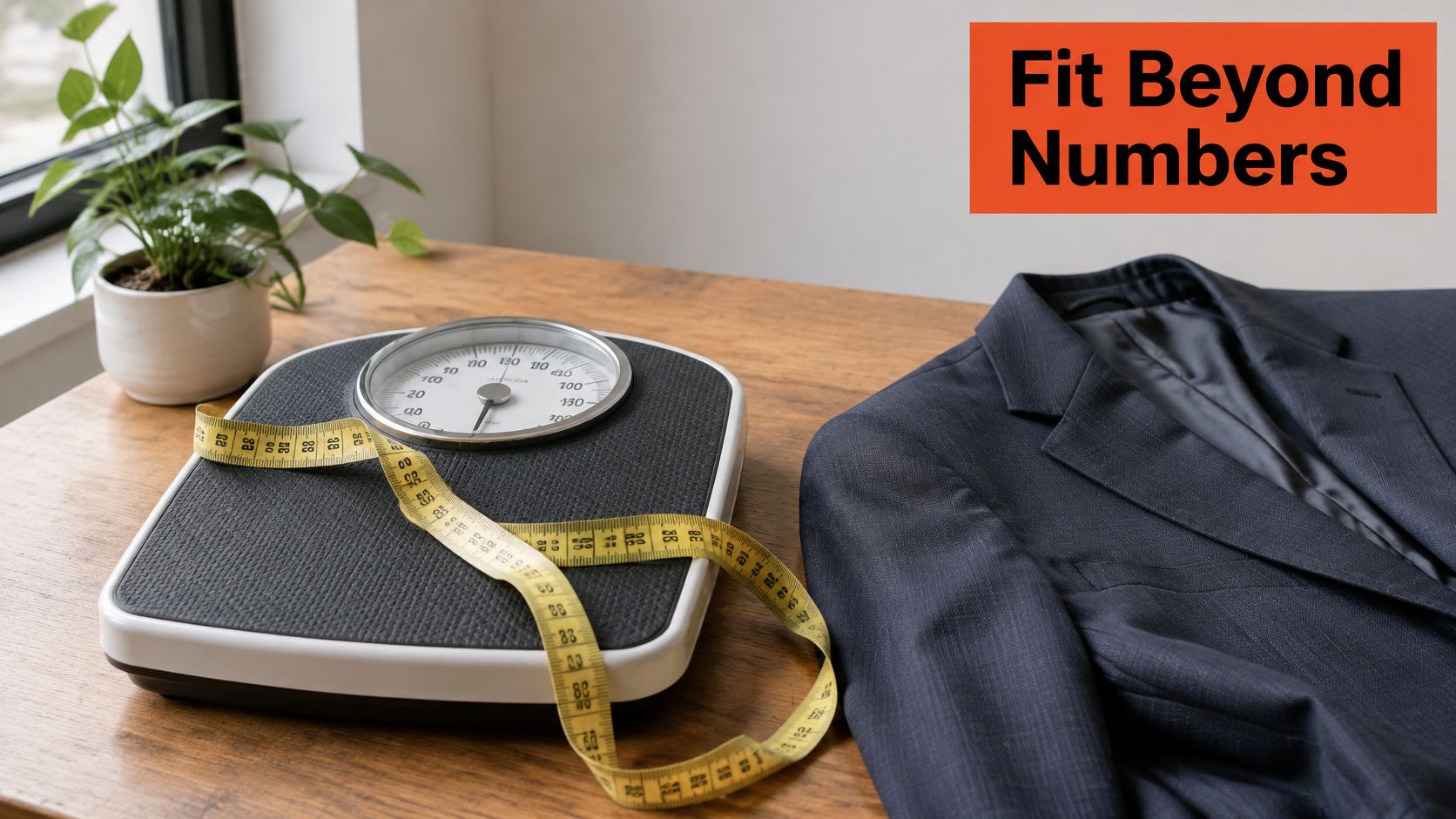
Their jackets need different geometry, not merely different labels. One may need more shoulder breadth with a shaped waist; the other may need less shoulder width and more room through the torso. Posture and torso length create further differences that a scale can't capture.
Body shape adds the missing context
Ready-to-wear jacket sizing generally uses chest circumference plus a length category, rather than weight as the label dimension. Conventional proportional sizing also leaves some builds poorly represented, especially when a shopper's upper and lower body don't follow the assumed relationship.
A guide to male body types can help you describe your proportions before choosing a fit profile. Treat those categories as descriptive shortcuts, not substitutes for a tape measure.
The useful question isn't whether a calculator sounds advanced. It's whether it collects the information needed to distinguish your build from someone else's.
How to Run the Estimate Step by Step
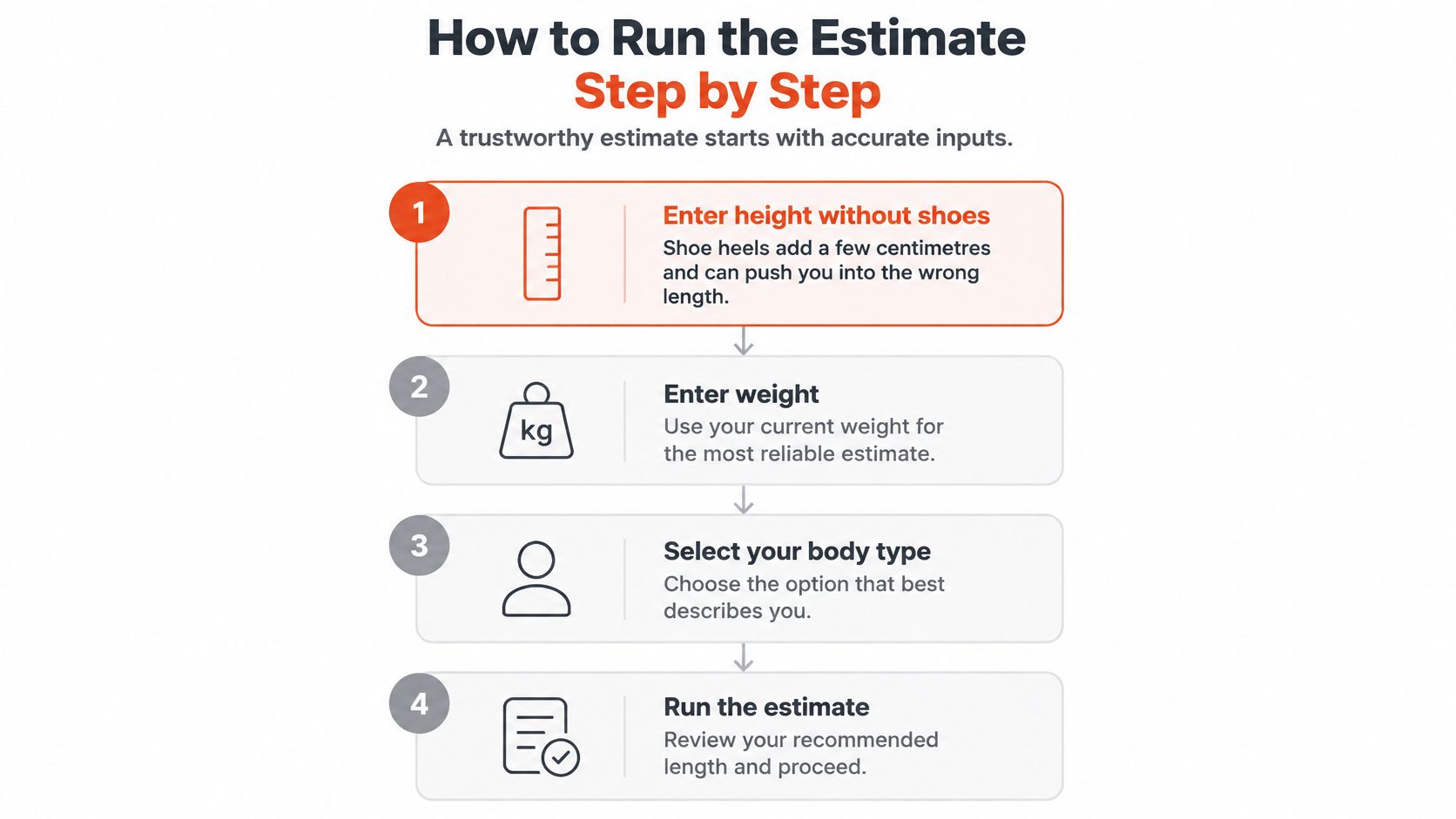
When you use a suit size calculator, height, weight, units, and body-shape choices all affect the usefulness of the result. Start with current information, and keep the retailer's product chart open beside the calculator.
Enter height without shoes. Stand against a wall with your head level and your heels on the floor. Don't use your height in dress shoes, since added heel height can push the estimate toward an unsuitable length category.
Use current weight under ordinary conditions. A normal morning measurement is more useful than an old number from a fitness app. Avoid choosing a reading immediately after a heavy meal or sweaty workout because it's the latest one available.
Choose the closest body illustration. Match the relationship between your shoulders, chest, waist, and hips, whether the options say athletic, slim, average, curvy, or plus-size. Picking an aspirational shape instead of your current proportions makes the input less useful.
Read chest size and length separately. Record both parts of the recommendation. A common slip is accepting the jacket number while overlooking whether the suggested length suits your torso.
Check the brand's own chart. Confirm whether its measurements describe bodies or finished garments, and check which fit you selected. Don't compare a slim-cut recommendation with the chart for a different product.
Keep a range when the result is uncertain. If your measured chest falls between the retailer's sizes, retain both candidates until you've checked shoulders and garment dimensions. Don't round automatically toward the size you usually wear.
Use the visual as an input checklist, rather than a guarantee of fit.
Check the input fields too
Make sure the calculator hasn't confused pounds with kilograms or decimal feet with feet and inches. For retailers building these forms, how DOM Studio tests numeric inputs offers a useful reference for checking numeric entry behavior.
Keep a note of the proposed size, any neighboring candidate, and the measurements still needed. The bust, waist, and hips measurement guide can help you identify circumference landmarks before you begin.
Measurements That Close the Gap
Measure your chest first. Wrap a flexible dressmaker's tape around its fullest part, keeping the tape level beneath your arms. Breathe normally rather than expanding your chest or holding your breath.
The NIST body-dimensions reference for apparel includes vertical dimensions such as height, sitting height, and crotch height. That distinction matters: total stature doesn't reveal how much of your height comes from your torso rather than your legs.
| Measurement | How to take it | What it decides |
|---|---|---|
| Chest | Tape around the fullest point, level under the arms, with relaxed breathing | Starting jacket size |
| Waist | Tape around the natural waist; check its position rather than assuming it is exactly at the navel | Jacket taper and trouser waist |
| Shoulder | Seam to seam across the back of a well-fitting jacket; use shoulder-bone landmarks for a body measurement | Whether the jacket frame fits; difficult to alter |
| Sleeve | From the shoulder bone to the wrist, arm slightly bent | Initial sleeve-length check |
| Inseam | Crotch to ankle bone for an initial body measurement | Starting trouser length |
| Height | Standing straight, shoes off | Initial length category |
Match the measurement method to the chart
A shoulder measurement taken from a jacket isn't the same as a measurement taken directly across your body. Likewise, a retailer may measure sleeves from a different starting point or specify trousers by their finished inseam.
Check the distinction between garment measurements and body measurements before comparing numbers. Don't add arbitrary extra room to a body measurement if the brand's chart already accounts for ease.
Measure over a thin shirt, with the tape snug but not compressing your body. Take each measurement twice; if the readings disagree, check tape position and repeat rather than averaging an obvious mistake.
Ask someone to help with shoulders and sleeves, since reaching around your own body changes your posture. If your shoulders are broad or your chest is substantially larger than your waist, a tailor can assess whether a different cut would work better than a different size.
When the estimate falls between sizes, check chest and shoulder fit first. Sleeve and trouser lengths shouldn't decide the jacket's entire frame.
Common Suit Fit Problems and How to Fix Them
A jacket that pulls across the buttoned chest needs diagnosis before alteration. The problem may be insufficient chest room, but a sharply tapered waist can also create tension around the fastening.
Use the location of the strain, not just the label, to decide whether to exchange the suit or book a fitting.
| Symptom | Likely cause | Fix |
|---|---|---|
| Jacket pulls across the buttoned chest | Chest too small or steep chest-to-waist taper | Try a larger chest size or fuller cut; tailor excess waist room if needed |
| Shoulder seam sits past the shoulder | Jacket too wide for shoulder breadth | Try a smaller size or narrower-shouldered cut; shoulder reduction is difficult |
| Sleeves cover the knuckles | Sleeves too long | Check measured sleeve length; ask a tailor about shortening |
| Sleeves stop well above the wrist | Sleeves too short | Try a longer sleeve option; lengthen only if sufficient fabric is available |
| Jacket gaps at the waist | Waist too roomy relative to chest | Take in side seams, or size down only if chest and shoulders still fit |
| Trousers pool at the shoe | Inseam too long | Have the hem set while wearing your intended shoes |
| Same size fits differently across brands | Different grading and cut | Compare with that brand's chart and your measurements |
Separate routine alterations from structural changes
Trouser hems and modest waist adjustments are common tailoring jobs. Sleeve shortening may also be straightforward, but working cuff buttons and construction details can make it more involved.
Lengthening requires usable fabric inside the garment. A tailor can't create missing cloth, and substantial shoulder changes can cost more than makes sense for a ready-to-wear purchase.
Brand inconsistency is widespread among surveyed fashion readers: Robosize's sizing overview cites Vogue Business, which found that 91% of 687 Vogue, Vogue Business, and GQ readers in the US and UK in 2025 said their clothing size depends on the brand. That doesn't establish which fit problem is most common, but it does explain why a familiar label isn't reliable proof.
Exchange structural mismatches before altering anything. Once the frame fits, ask a tailor to assess the smaller adjustments.
When Weight Changes and the Size Goes Stale
A Coresight Research survey cited in Shopify's sizing-guide article reported that 72% of US GLP-1 users had dropped at least one clothing size. A previously useful recommendation can become outdated when the body behind its inputs changes.
Keep your measuring tools accessible if your proportions are changing.
Height is usually relatively stable for an adult over a shopping interval; weight, waist, chest, and body composition are more variable. Those changes don't necessarily happen evenly, so a jacket may retain its chest fit while becoming loose at the waist.
Update for changes in shape, not just the scale
Strength training can change chest and shoulder proportions. Pregnancy, aging, illness, and surgery can also make an older profile less representative of your current body.
- Date your measurements. Keep chest, waist, and shoulder readings together so you know when they were taken.
- Remeasure after a noticeable change. Pulling or gaping in a previously comfortable jacket is a useful trigger, even without a major scale change.
- Buy for your current body. Compare present measurements with the older profile, and ask a tailor about alteration options rather than ordering for an uncertain future size.
Use measurement demonstrations to check technique before updating your profile.
There's no universal calendar interval that makes every profile reliable. Refresh the inputs when your body changes, rather than waiting for a saved recommendation to expire.
Choose the Size and Order With Confidence
Choose the size supported by your chest and shoulders, rather than letting weight overrule them. If the starting estimate conflicts with those measurements, investigate the product chart or request garment dimensions before paying.
Keep the alteration plan modest. Sleeves and trousers are often manageable, while an unsuitable shoulder frame or insufficient jacket width usually calls for a different size or cut.
Protect your purchase
Check the return deadline, exchange conditions, and whether altered garments remain eligible. Fit remains a practical purchasing risk: Rendered Fits cites the International Council of Shopping Centers, which found that 50% of surveyed US consumers in 2024 gave an item not fitting as a reason for returning an online purchase.
If a store uses our Robosize fitting room, shoppers enter height, weight, age, and the closest illustration of their body proportions. We provide a garment-specific size and fit recommendation matched to the store's own size chart; stores can upload unlimited charts to support product-to-chart matching.
Treat that recommendation as garment-specific guidance, then check it against your measured chest and shoulders. Buy the frame that fits, and tailor only the adjustments that are practical and affordable.
Robosize offers garment-specific sizing and virtual try-on for online clothing stores, connecting shopper proportions with the retailer's own size charts. Visit Robosize to request a live demo and see how height-and-weight inputs can support a more useful product-page fitting experience.