You've found a pair of pants that looks perfect online. The product photos are convincing, the price is right, and you're ready to order. Then the size selector asks whether you want a 6, 8, M, or a waist-and-inseam combination, and the chart seems to describe a completely different person from the one in the mirror.
The reliable way to find pant size isn't to remember the number that worked at another store. It's to measure your body, understand how the garment is cut, and compare your measurements with the chart for that exact product. Waist and inseam matter, but hips, thigh, rise, and outseam often decide whether pants feel comfortable or fail in one very noticeable place.
Table of Contents
- Why Pant Sizes Feel So Inconsistent
- How to Measure Waist Hip and Inseam Accurately
- How to Read Any Pant Size Chart With Confidence
- International Pant Size Conversions Made Simple
- How Rise Fit and Fabric Change Your Ideal Size
- Smart Tips to Get the Right Size When Shopping Online
Why Pant Sizes Feel So Inconsistent
You order your usual size, wait for delivery, and discover that the waistband gaps while the thighs pull. Returning the pants doesn't mean you measured incorrectly. It often means the label describes a sizing system, not a universal physical dimension.
Modern pant sizing grew out of the shift from individually made clothing to standardized ready-to-wear garments. Industrial ready-to-wear systems developed in the 1800s, and early practical menswear sizing used military measurement data from the Civil War era. Chest, waist, and inseam measurements offered manufacturers a shortcut for producing garments for many people instead of tailoring every pair individually. For women's clothing, the U.S. Department of Agriculture measured 15,000 women in 1939 while working toward a national sizing system. That work contributed to the first officially recognized American women's sizing standard in 1958, which ranged from sizes 8 to 42 and included short, regular, and tall height designations. You can read the history in Time's account of clothing-size standardization.
A label is not a measurement
A number such as 34 may refer to a trouser waist, a brand's internal size category, or a conversion from another market. It may also describe a garment measurement rather than the body measurement you expect. The same label can produce different results because brands change the rise, ease, fabric, waistband placement, and intended silhouette.
That's why the useful question isn't only, “What pant size am I?” A better question is, “Which size in this brand's chart accommodates my waist, hips, and leg length for this particular cut?”
Practical rule: Treat the size label as an index into a chart, not as a permanent identity.
This approach also helps if you sew or alter clothing. Anyone looking for trouser sewing tips for hobbyists will see the same principle in practice: fit comes from measurements and proportions, not from a label alone. Once you record your own numbers, shopping in-store and online becomes a repeatable comparison rather than a guess.
How to Measure Waist Hip and Inseam Accurately
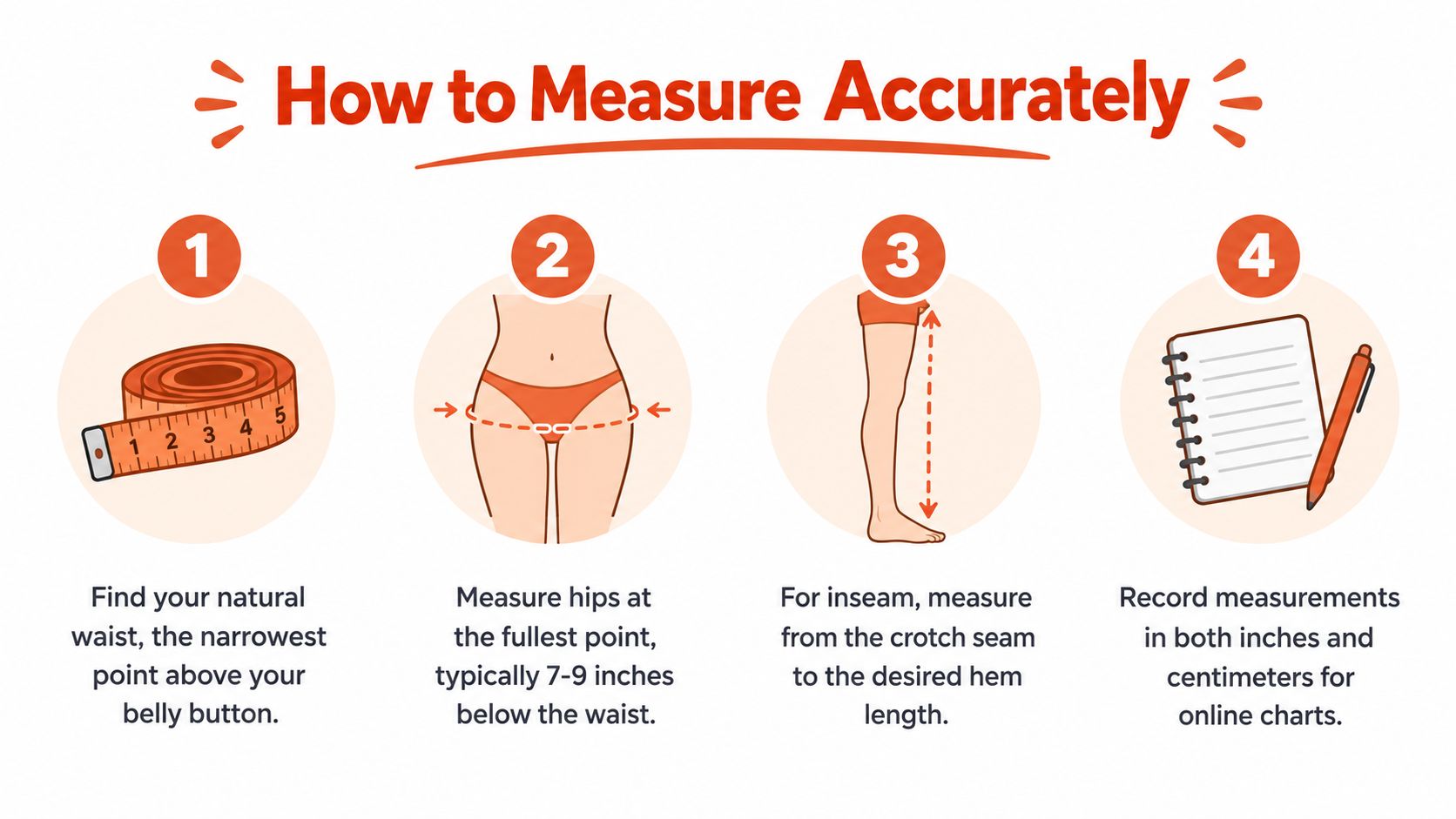
Use a flexible measuring tape, a mirror, and a notebook or phone. Wear light clothing, stand naturally, and keep the tape close to the body without pulling it tight. Record each result in both inches and centimeters, because retailers use different units.
Take the core body measurements
Waist: Find your natural waist, usually the narrowest part of your torso above the hip bones. Bend gently to one side if you're unsure where your body creases, then stand normally and place the tape around that level. Keep one finger beneath the tape so you can breathe comfortably.
Hips: Measure around the fullest part of your seat and hips. Keep your feet together and check the mirror to ensure the tape stays level from front to back. This measurement matters especially for fitted trousers, jeans, and pants with little stretch.
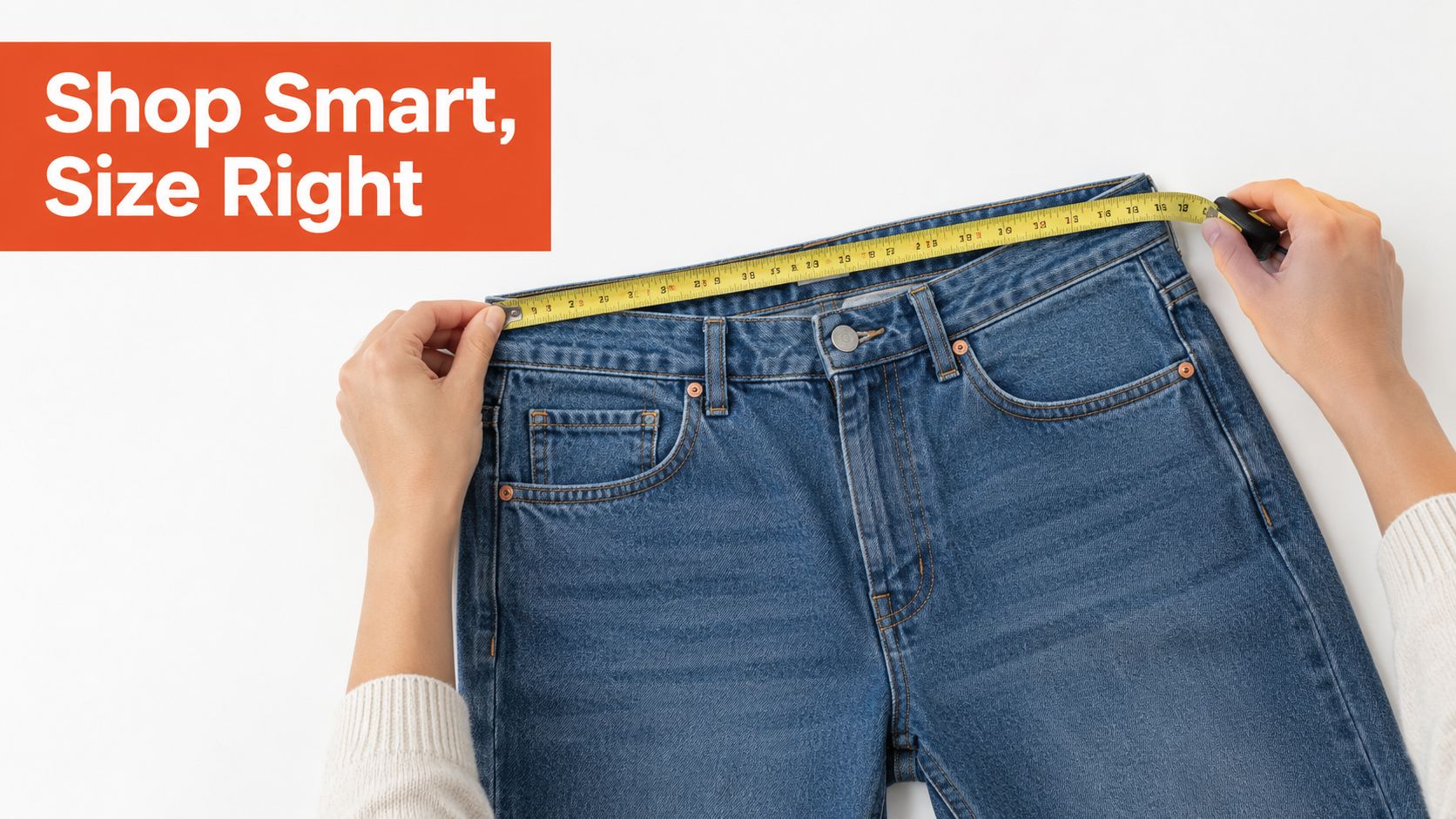
Inseam: On your body, measure from the crotch to the ankle or to the point where you want the hem to finish. It's easier with a helper, but you can also use a pair of pants that already fits well. Lay the garment flat, measure from the crotch seam along the inside leg to the hem, and avoid following the curve of the leg.
Rise: Measure from the front waistband, between your legs, to the back waistband. A garment measurement is often more useful than a body measurement here. Compare it with a pair that feels comfortable at the front and back.
The ISO 8559-1:2017 anthropometric approach supports capturing a standardized set of body measurements and mapping them to size and fit profiles instead of relying on one waist number. The standard is designed to guide body measurement and the creation of size and shape profiles for garments, as described in this technical discussion of apparel sizing systems.
Add the measurements that solve fit problems
Measure your thigh around the fullest part of one upper leg. For pants that feel tight when you sit or climb stairs, thigh circumference can explain the problem even when the waist is correct.
Measure outseam from the top of the waistband, down the outside of the leg, to the desired hem. Outseam is useful when a chart lists total garment length or when the pants have a distinctive rise.
For a careful at-home process, follow this guide to taking your own measurements. Keep a dated measurement note, but recheck before buying close-fitting pants if your body or preferred waistband position has changed.
Keep the tape level around your body. A tilted tape can make one side look smaller and lead you toward the wrong size.
How to Read Any Pant Size Chart With Confidence
A size chart translates your measurements into the manufacturer's categories. Start with the product page, not a general chart from the same retailer, because different cuts may use separate measurements and fit intentions.
Look for three columns first: waist, hip, and inseam. If the chart lists body measurements, compare your body directly. If it lists garment measurements, allow for the room you need to move and sit. Don't assume a garment waist measurement equals the waist measurement printed on a tag.
Choose by the largest constraint
Suppose a fitted pair has a waist that falls between two sizes, but your hips reach the upper size. Choose the larger size and alter the waist if necessary. Taking in a waistband is usually more straightforward than trying to create room across the hips, seat, or thighs.
For straight or relaxed pants, the waist may be the controlling measurement because the cut already provides room through the lower body. For fitted pants, hips and thighs often control the decision. Inseam usually determines the length option rather than the basic width size, although some brands combine both in one selector.
| Your Measurement | Chart Size S | Chart Size M | Best Choice |
|---|---|---|---|
| Waist | Slightly small | Fits | M |
| Hips | Too small | Fits with room | M |
| Inseam | Available | Available | Select the needed length |
| Overall decision | Restrictive | Accommodates the largest constraint | M |
Fit dissatisfaction isn't a minor edge case. One industry survey reported that 34% of consumers were unsatisfied with traditional apparel sizes offered by retailers. That finding helps explain why your normal label may fail even when you've bought from the same general category before. See the consumer fit dissatisfaction survey for the cited finding.
Read the chart's fine print
Check whether the measurements describe the body or the finished garment. Look for notes about stretch, intended ease, low or high rise, and whether the listed inseam changes with the size. Also check the model's height and worn size when those details are provided, but use them only as context. Your measurements should make the final decision.
International Pant Size Conversions Made Simple
Cross-border shopping becomes confusing because countries and brands organize pants differently. A U.S. women's numeric size, a UK numeric size, an EU number, and an alpha size such as S or M may all describe overlapping customers without representing identical measurements.
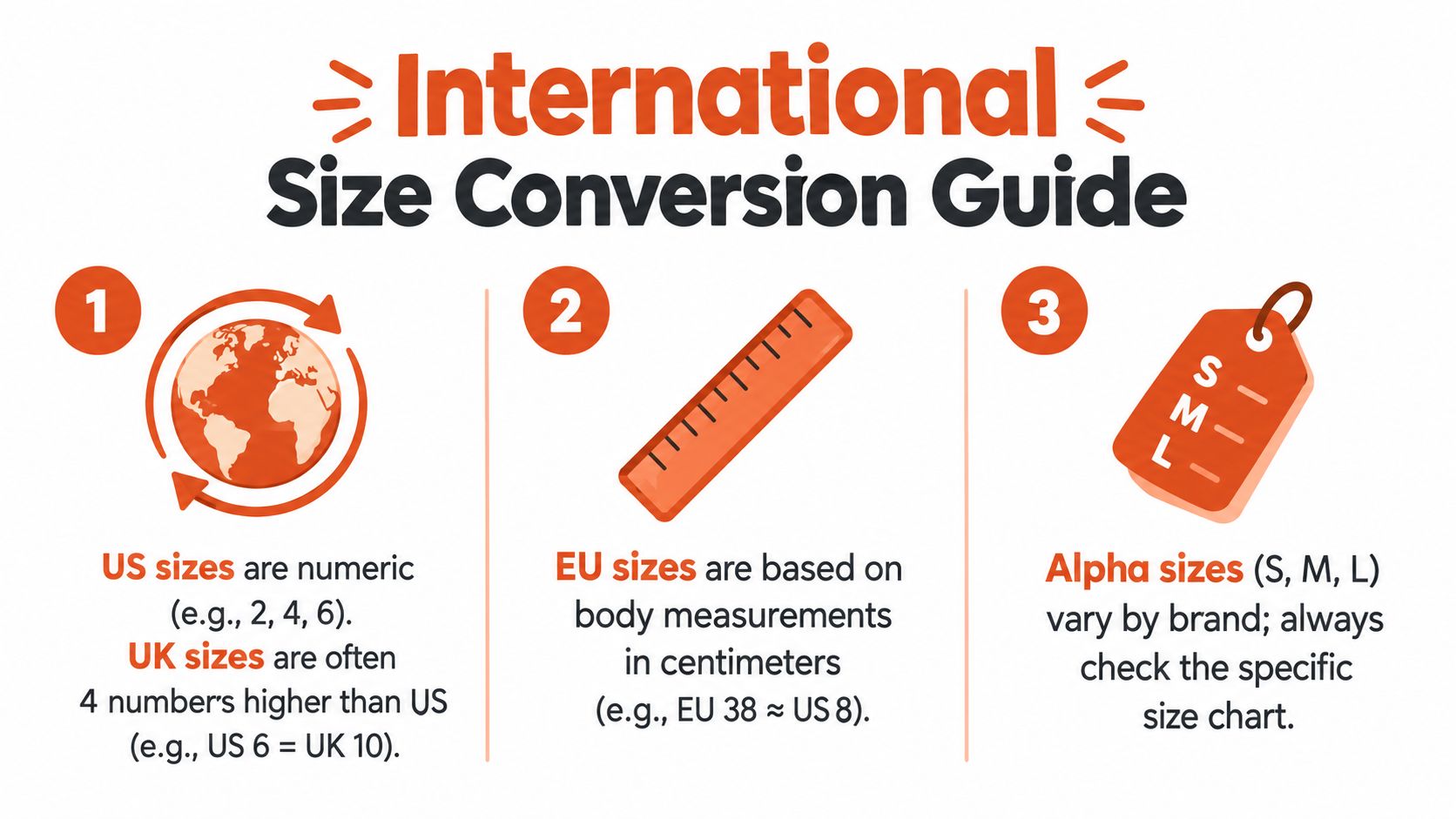
Use a conversion chart as a starting point, then return to the retailer's waist, hip, and inseam columns. A converted number can help you manage a foreign website, but it shouldn't override a direct measurement in inches or centimeters.
| System | Common format | How to use it |
|---|---|---|
| U.S. | Numeric size or waist and inseam | Check whether the number is a women's category size or a direct waist measurement |
| U.K. | Numeric size | Compare the retailer's own chart rather than assuming a fixed conversion |
| EU | Numeric size | Use the listed centimeter measurements whenever available |
| Alpha | S, M, L and similar labels | Treat the letter as a broad category and verify the product chart |
| Length | Inches or centimeters | Match inseam or full garment length separately from width |
EU charts often emphasize centimeter-based body measurements, while jeans and trousers may display inseam in inches. Convert your notes before shopping so you can compare like with like. A calculator or a saved conversion note is useful, but the brand's own chart remains the authority for that product.
For a broader reference, keep this clothing size conversion chart beside your measurements. It can reduce confusion while browsing, especially when a store uses both regional and alpha sizing.
Research also shows why conversions can't promise an exact answer. One machine-learning study found that 35.45% of participants did not align with any specific sizing category, with misclassifications concentrated around adjacent and extreme sizes because categories overlap and populations are unevenly represented. The finding is reported in this apparel sizing classification study. Use conversions to locate the right part of a chart, then choose from the measurements.
How Rise Fit and Fabric Change Your Ideal Size
Two pairs of pants can share a waist and inseam while fitting very differently. The rise changes where the waistband sits, the cut controls how much room the garment provides, and the fabric determines how readily it accommodates movement.
High-rise pants sit closer to the natural waist. They may need a more generous front rise and hip allowance, particularly if the waistband is meant to stay flat while you sit. Mid-rise pants sit between the natural waist and the upper hip. Low-rise pants sit lower on the body, so your hip measurement and the point where you wear the waistband become more important than a natural-waist measurement alone.
Match the size to the cut
Skinny pants need enough room through the hips and thighs to prevent pulling. Straight-leg pants maintain a more even line below the hip, while relaxed and wide-leg styles offer additional room but can still fail if the waistband or rise is wrong.
Stretch denim or trousers containing elastane can support a closer fit, but stretch doesn't fix an insufficient rise or a waistband that sits at the wrong point. Rigid fabric needs enough ease for sitting, bending, and walking. If you're between sizes in a close cut, the larger option may preserve comfort. In a relaxed cut, the smaller option may work only if the waist and hips remain within the chart's measurements.
Use fit symptoms as clues
- Waistband gaping: The hips may need the larger size while the waist needs tailoring, or the rise may not match your proportions.
- Tight thighs: Compare your thigh measurement with the garment chart and look for a roomier cut.
- Short rise: Check the front and back rise rather than changing only the waist size.
- Hem at the wrong place: Compare inseam and outseam, then select a short, regular, or tall length when offered.
Most quick guides stop at waist multiplied by inseam. Independent measurement guidance increasingly includes hips, thigh, rise, and outseam because those dimensions address recurring failures such as gaping waistbands, tight thighs, and short rises. The broader measurement approach is outlined in this guide to measuring pant size.
For another explanation of how proportions affect clothing fit, see this body shape model resource. The practical lesson is simple: don't size up or down by habit. Identify the part of the garment that is restricting movement or losing contact with your body, then use the relevant measurement.
Smart Tips to Get the Right Size When Shopping Online
Online shopping works better when you turn sizing into a small routine. Measure once, save the results, and compare them with every product chart instead of relying on the last label that happened to fit.
Build a personal shopping record
Keep waist, hip, thigh, inseam, rise, and outseam measurements in both inches and centimeters. Add notes about where you prefer pants to sit, which inseam looks right with your shoes, and whether you prefer a close or relaxed fit. This turns future shopping into a comparison exercise.
Before ordering, work through this checklist:
- Confirm the product chart: Use the chart attached to the exact style, not only the retailer's general chart.
- Check the fabric: Look for stretch content and care instructions that may affect the finished fit.
- Compare the garment details: Review rise, leg shape, pocket placement, and available length options.
- Study model information: Use the model's height and worn size as visual context, never as a substitute for your measurements.
- Read return terms: Confirm whether exchanges, alterations, and return shipping work for your location.
- Use fit technology when available: Some retailers offer virtual try-on or a size recommender that combines shopper inputs with garment-specific data.
Robosize is one option retailers can place on a product page. It uses inputs such as height, weight, age, and body shape, with an optional selfie, to create a shopper-specific body model, show a photorealistic garment preview, and recommend a size for the individual product. It can also handle metric and imperial units, which is useful when a store serves shoppers across markets.
The best result is a saved record you can update after trying a new brand. Note not only whether the pants fit, but where they succeeded or failed. Over time, those observations help you recognize which rises, fabrics, and cuts suit your proportions.
If you want shoppers to move from uncertain measurements to a garment-specific recommendation, visit Robosize. It provides AI sizing guidance and virtual try-on for online apparel retailers, helping customers evaluate pants and other garments directly on the product page.