You've found the shirt you want, added it to your basket, and reached the size selector. Then the doubt starts. Is your usual Large still a Large here, or does this brand's Medium match the fit you want? If the product comes from another country, even the number on the label may use a completely different system.
A clothing size calculator for men replaces that hopeful click with a measurement-based recommendation. It won't remove every fit decision, because fabric, cut, posture, and personal preference still matter, but it gives you a reliable starting point for shirts, trousers, jackets, suits, and other garments.
Table of Contents
- The Online Sizing Problem Every Man Has Faced
- What a Men's Clothing Size Calculator Actually Does
- The Inputs That Drive the Calculation
- What Makes a Size Recommendation Accurate
- How to Take Your Measurements the Right Way
- Why Sizing Changes by Garment Type
- Using the Result to Pick the Right Size Online
- A Simple Fit Checklist and Where Sizing Goes Next
The Online Sizing Problem Every Man Has Faced
You find a shirt online, select your usual size, and pause before checkout. One retailer calls you Medium, another calls you Large, while a formal shirt uses a collar number. The product page then asks for chest, neck, sleeve, or waist measurements. Your familiar label suddenly provides little guidance.
That confusion has a practical cause. S, M, and L are labels, not universal measurements. Each label covers a range of body dimensions, and brands place those ranges differently. L.L.Bean's chart, for example, maps men's S to a 34 to 36 inch chest, while XXXXXL covers a 62 to 64 inch chest. It also gives separate bands for waist, neck, and sleeve length (L.L.Bean's men's size chart).
Why guessing creates avoidable problems
A shirt can fit across the chest and still have sleeves that end too high. Trousers can fit at the waist while the inseam puts the hem above your shoes. A jacket can feel fine while you stand, then pull across the shoulders when you reach forward. The label gives one answer, while the garment has several fit points.
Garment-specific inputs make the difference. Collar and sleeve measurements matter more for a dress shirt, inseam matters more for trousers, and chest, shoulder, and sleeve proportions matter for a jacket. Treating every item as a T-shirt with an S, M, or L label is like choosing shoes by width alone.
Cross-border shopping adds another source of error. US, UK, EU, Japanese, and Korean labels may refer to related systems without matching exactly. Numerical sizes can also shift when a brand changes from slim to regular or relaxed cuts. A vanity sizing chart helps explain why the same label may not represent the same body measurements across retailers.
Modern AI try-on tools can reduce the remaining uncertainty by showing how a garment may sit on your body, but they do not replace accurate measurements or a product-specific chart. Your chest, waist, neck, sleeve, and inseam measurements remain more portable than the word Medium.
Practical rule: Match your body measurements to the garment's chart, then use the label as shorthand. Record those measurements consistently so every purchase starts with evidence rather than a guess.
What a Men's Clothing Size Calculator Actually Does
You find a shirt that looks right, enter your usual size, and receive a recommendation. The result feels precise, but the tool is not judging the garment on your body. It is matching your measurements with the brand's chart and returning the closest available size.
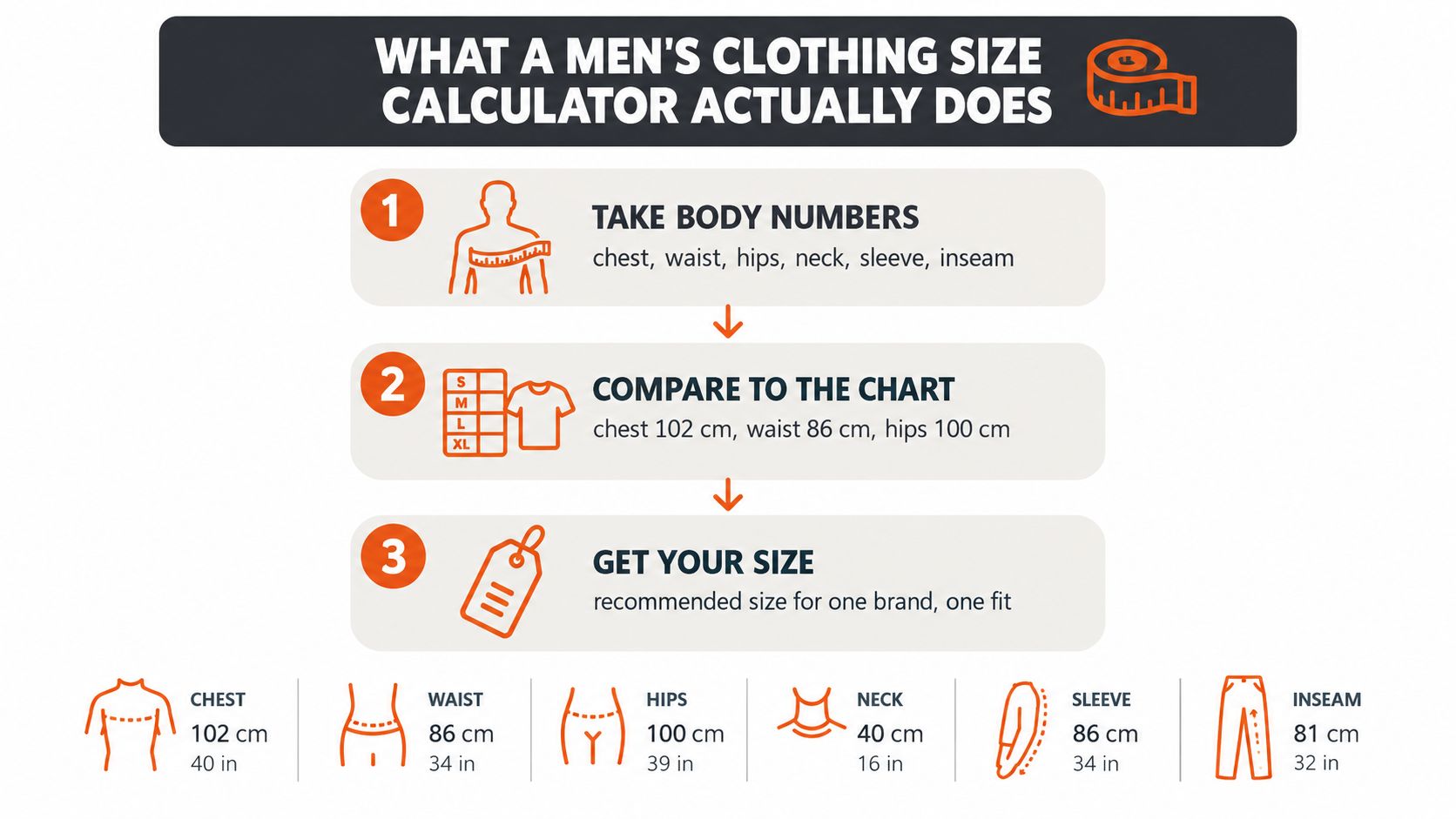
The basic process has four stages:
- Collect the inputs. Depending on the garment, the calculator may request height, weight, chest, waist, hips, neck, sleeve, or inseam.
- Standardize the units. Inches and centimeters are converted into a consistent format, so the tool compares equivalent measurements.
- Match measurements to size bands. Your figures are checked against the thresholds listed by the retailer or brand.
- Return a garment label. The answer may be S, M, L, 40R, 32×32, or a collar-and-sleeve combination.
The phrase for a particular garment controls the whole process. A Large recommendation for a casual shirt does not automatically give you the right jacket or trouser size. A shirt may prioritize collar and sleeve length, while trousers depend more heavily on waist and inseam. The calculator should make those differences visible rather than treating every item like a T-shirt.
A lookup engine, not a magic fitting room
A basic calculator works like a lookup engine. It finds the nearest row or column in a size chart, then displays the matching label. That makes shopping faster, but the recommendation is only as reliable as your measurements and the chart used by the tool.
Brand charts show why one label cannot describe every body. For example, a men's chart may connect size with chest, waist, and inseam, with an S range covering one chest band and an XL range covering a larger one. The waist and inseam can still point toward a different choice. The calculator therefore needs several relevant inputs, not one generic S, M, or L conversion.
More advanced systems can combine body shape, preferred ease, and previous fit feedback. AI try-on tools add a visual layer by estimating how a garment may sit on an individual body model. They can narrow the confidence gap, but accurate measurements and product-specific information still determine the quality of the recommendation.
Unusual garments need their own reference point. If you are comparing one-piece or robe-like clothing, browse robe sizing details instead of applying a shirt or trouser chart to the wrong product category.
The Inputs That Drive the Calculation
Height and weight are useful orientation points, but they're weak as a complete sizing method. Two men can share a height and weight while having different chest, waist, shoulder, or leg proportions. A calculator that relies only on those two fields can identify a rough frame, not a dependable garment fit.
What each measurement controls
Chest usually carries the most weight for T-shirts, casual shirts, overshirts, jackets, and suits. Measure around the fullest part of the chest, keeping the tape level. A chest measurement of 40 inches, or about 102 centimeters, is not automatically a Medium or Large. The brand's chart and the garment's intended ease decide the label.
Waist matters most for trousers, jeans, suit trousers, and fitted shirts. It also helps identify cases where your top and bottom sizes differ. A man may need more room through the waist than his chest measurement suggests, particularly when a garment has a narrow cut.
Inseam controls trouser length. It runs from the crotch to the desired hem area, so a waist size without an inseam is incomplete for many trousers. A label such as 32×32 combines waist and inseam rather than describing one overall size.
Neck or collar determines the first number on a traditional dress-shirt label. A shirt marked 16/34 uses a 16-inch collar and a 34-inch sleeve. That system can't be replaced by a generic chest-based S/M/L conversion when collar comfort matters.
Sleeve length affects dress shirts, jackets, coats, and long-sleeve casual shirts. A correct chest with a short sleeve still looks and feels wrong. For jackets, sleeve length should be considered alongside shoulder position because the sleeve begins at the garment's shoulder construction.
Hips or seat become more important for trousers, relaxed tailoring, and garments that need room around the fullest part of the lower body. A calculator that ignores this measurement may recommend a waist that technically matches but restricts movement through the seat.
Prioritize by garment
| Garment | Measurements to prioritize |
|---|---|
| T-shirt | Chest, shoulder, length, and preferred fit |
| Dress shirt | Neck, sleeve, chest, and sometimes waist |
| Trousers or jeans | Waist, inseam, hips, rise, and thigh |
| Jacket or coat | Chest, shoulders, sleeve, waist, and layering preference |
| Suit | Chest, shoulders, waist, sleeve, hips, and inseam |
Advanced tools may also ask about shoulder width, thigh, rise, or body shape. Those inputs are especially helpful when your chest and waist point to different size bands, or when you have an athletic, broad, tall, or fuller build.
If you want a quicker starting point based on proportions, use a height and weight clothing size calculator, then confirm the result with the garment's most important measurements. Height and weight should guide the search, not end it.
What Makes a Size Recommendation Accurate
A recommendation becomes useful when it reflects the garment, the brand, and the way you want it to fit. A calculator can process measurements perfectly and still produce a poor result if it uses the wrong chart or treats a finished garment measurement as though it were a body measurement.
Body measurements are not garment measurements
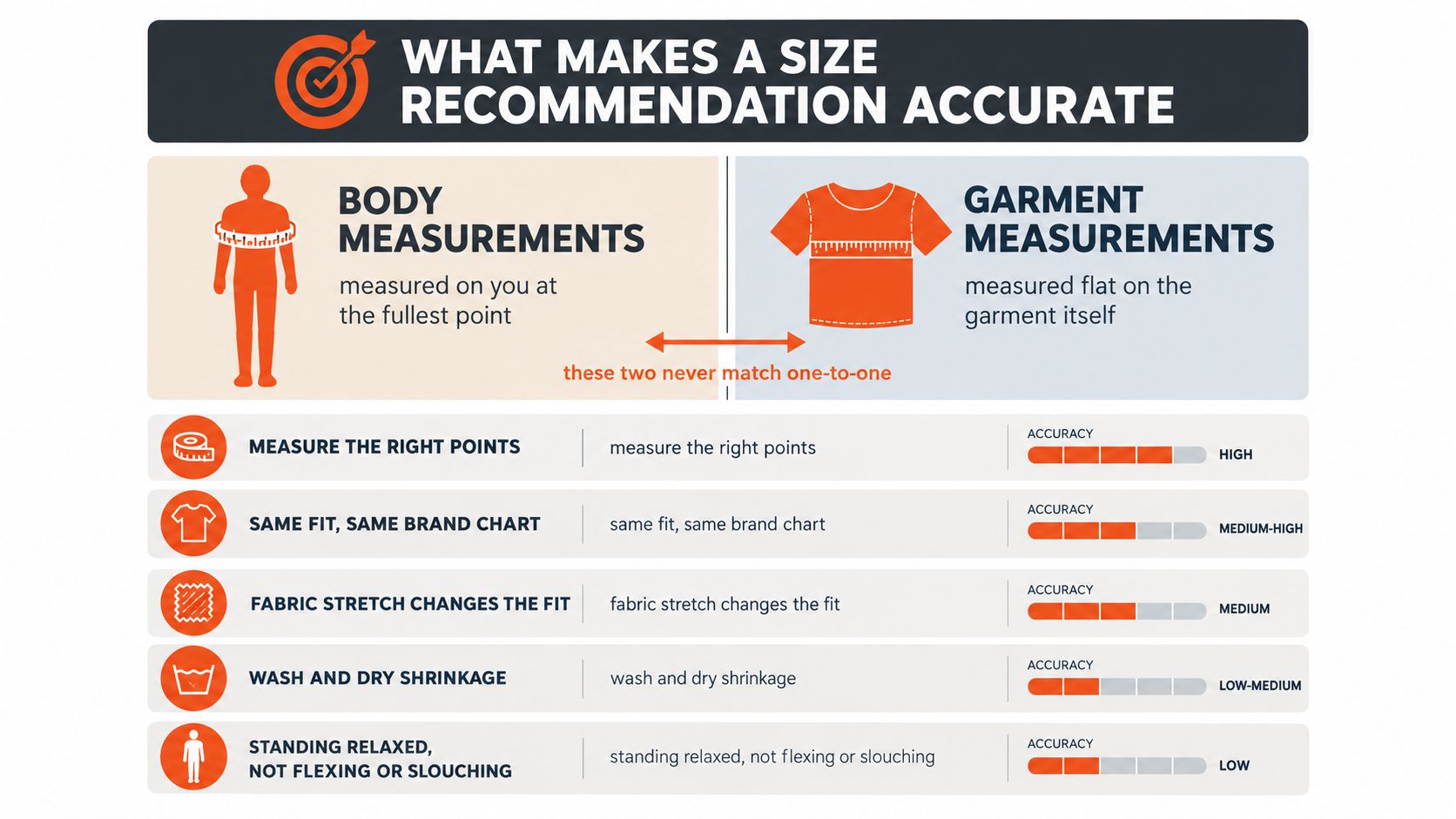
Your body measurement is taken around you. A garment measurement is taken on the finished item, often while it lies flat. Those numbers don't match one-to-one because the garment needs room for movement, layering, and the intended silhouette. Guidance on this distinction is outlined in fashion sizing terminology and chart guidance.
Suppose your chest measures 40 inches. A shirt made for that body measurement may have a larger finished chest because it includes ease. A close-fitting stretch top may use less additional room than a structured jacket. Comparing your chest directly with a flat garment measurement without understanding the chart can send you into the wrong column.
Ease changes the answer
Ease is the space between your body and the garment. Slim, regular, and relaxed fits can use the same letter label while creating very different silhouettes. Fabric stretch, lining, shoulder construction, and the need to wear another layer also change how much room feels comfortable.
Brand variance is another source of error. One retailer's Medium may suit a particular chest range, while another retailer places that same body measurement in Large. The letter itself doesn't settle the question.
The chart is the authority for that product. Your old size is only a clue.
Unit handling matters as well. If a site expects centimeters and you enter an inch value, the result will be unusable. Even when the unit is correct, rounding a borderline measurement too aggressively can move it into the wrong band. Keep the original number and check how the site asks you to round.
A reliable calculator should therefore ask for garment-specific measurements and fit preference. It should also show enough information for you to cross-check the output against the brand's published chart rather than presenting a label with false certainty.
How to Take Your Measurements the Right Way
You need a soft measuring tape, a mirror, and a relaxed posture. Measure over a thin shirt or light clothing, not a bulky sweater, and keep the tape flat against your body without compressing it.
Follow the tape around the right points
- Chest: Wrap the tape around the fullest part of your chest, usually below the armpits. Keep your arms relaxed and the tape parallel to the floor.
- Waist: Measure at your natural waist or the crease where your body bends. Don't pull your stomach in.
- Hips: Place the tape around the widest part of your hips and seat. Stand naturally with your feet in a comfortable position.
- Neck: Wrap the tape around the base of your neck where a collar sits. Leave enough room for comfortable movement rather than pulling it tight.
- Sleeve: Start at the centre-back neck, run the tape across the shoulder, and continue down the arm to the wrist. Keep a slight bend in the elbow.
- Inseam: Measure from the crotch down the inside leg to the point where you want the trouser hem to finish. Measuring a pair of trousers that already fits can provide a useful comparison.
Ask another person to hold the tape when possible. Self-measuring can twist the tape or change your posture, especially for chest, sleeve, and back measurements. Take each measurement twice and record the result in both inches and centimeters if you shop internationally.
The guide to taking body measurements for clothing can help you keep the process consistent. For accessories, the same principle applies, but the location changes. If you need a separate reference for a perfect fitted hat fit, measure the head rather than trying to reuse your shirt or jacket numbers.
Now enter the numbers carefully. Select the correct unit toggle, check whether the page requests body measurements or finished garment measurements, and choose the actual product category. Don't enter your inseam into a general leg-length field unless the instructions define it clearly.
Use this video as a visual supplement to the written method:
Why Sizing Changes by Garment Type
A single body profile can produce different recommendations because each garment solves a different fit problem. A dress shirt needs collar comfort and sleeve reach. Trousers need room through the waist, seat, rise, and thigh. A jacket must sit correctly over the upper body and may need to accommodate another layer.
Four categories, four sets of priorities
Dress shirts often use collar and sleeve measurements rather than only S/M/L. A label such as 16/34 identifies a 16-inch collar and a 34-inch sleeve. Chest and waist still affect how the shirt sits, but the collar and sleeve can determine whether the shirt feels wearable.
Casual shirts and T-shirts usually use alphabetic labels. Chest is the main anchor, while shoulder width and garment length help confirm the result. Stretch jersey may tolerate a closer body fit, whereas a rigid woven shirt needs more consideration around the shoulders and upper arms.
Trousers and jeans commonly display waist and inseam together. That pair doesn't describe the entire fit. Rise changes where the waistband sits, while thigh and seat measurements determine whether the trousers pull when you sit or walk. Athletic, straight, tapered, and relaxed cuts can place different amounts of fabric in those areas.
Jackets and suits need the most careful checking. Chest and shoulder fit establish the structure, while sleeve length, waist, and the amount of layering determine comfort. Suit trousers may use a different waist proportion from the jacket, so the matching set isn't always a perfect match for every body.
| Garment Type | Primary Inputs | Typical Size System | Fit Tolerance |
|---|---|---|---|
| Dress shirt | Neck, sleeve, chest, waist | Collar and sleeve numbers | Low around collar and sleeve |
| Casual shirt | Chest, shoulders, length | S, M, L, XL | Moderate, depending on fabric |
| T-shirt | Chest, shoulders, preferred ease | S through XXL | Often more forgiving |
| Trousers | Waist, inseam, hips, rise, thigh | Waist x inseam or numeric size | Low around waist and seat |
| Jacket or suit | Chest, shoulders, sleeve, waist | Numeric size with length | Low around shoulders and chest |
That tolerance is why you shouldn't reuse a T-shirt recommendation for a suit jacket. The same chest number may be a sound starting point for both, but the calculator needs different secondary inputs to resolve the final size.
Using the Result to Pick the Right Size Online
Treat the calculator's output as a starting recommendation, not a guarantee. Open the product page and find the brand's own chart. Compare your measurements with the chart's numbers, not just with the displayed S, M, or L label.
Read the product's fit description before choosing. “Slim,” “classic,” “regular,” and “relaxed” describe how the garment is cut, so the same label may feel very different across those categories. If you're between chart values and want room to move, the larger option may be more comfortable. If you prefer a close silhouette and the fabric has suitable stretch, the smaller option may be appropriate, provided the shoulders, collar, or waistband aren't restrictive.
Check the secondary measurement
The largest mistake is checking only the measurement that produced the headline size. A shirt may match your chest but fail at the collar or sleeve. Trousers may match your waist but miss at the inseam or thigh. A jacket may match the chest while the shoulders pull.
Use this quick review before ordering:
- Compare the main measurement: Check chest for tops and jackets, waist for trousers.
- Check the length: Confirm sleeve or inseam rather than assuming it follows the main size.
- Read the fit note: Identify whether the product is slim, regular, relaxed, oversized, or athletic.
- Inspect the fabric: Stretch and structure affect how closely the garment can sit.
- Read reviews carefully: Look for repeated comments that the item runs larger, smaller, shorter, or longer than expected.
- Review returns: If you order two sizes for comparison, make sure the retailer's return terms and shipping responsibility are acceptable.
A focused product guide can also clarify category-specific differences. For example, this SoccerWares fit guide is more useful for hoodie decisions than a formal shirt chart because the garment has a different construction and fit expectation.
When two sizes remain plausible, prioritize your largest reliable measurement for structured garments. A tailor can often adjust excess fabric more easily than a garment can be made comfortable after it pulls across the shoulders or chest.
A Simple Fit Checklist and Where Sizing Goes Next
A dependable sizing routine doesn't need to be complicated. Keep one record of your current measurements, update it when your body changes, and use the relevant numbers for each product rather than copying one general size from order to order.
Your repeatable online sizing routine
- Measure the key points: Record chest, waist, hips, neck, sleeve, and inseam.
- Keep both units: Store centimeters and inches so international charts are easier to read.
- Use the garment category: Select shirt, trouser, jacket, suit, or another specific category.
- Check the product chart: Compare measurements with the brand's own table.
- Read the fit details: Look for cut, stretch, construction, and layering guidance.
- Save successful orders: Note the garment, label, measurements, and fit preference for future reference.
Static calculators are gradually being complemented by AI-driven virtual try-on. These systems can use a questionnaire, an optional selfie, or a selected model to create a shopper-specific body representation, then show how a garment may drape from more than one viewpoint. A product-page recommender such as Robosize combines body details with product-specific sizing information to provide a size suggestion alongside the visual preview.
That technology doesn't make measuring irrelevant. It uses the same underlying logic, brand charts, garment details, and body proportions, but it can make a borderline decision easier to understand. The strongest approach combines accurate measurements with product-specific chart checking and a visual fit preview where available.
Use your measurements as the foundation for every online clothing purchase, then let Robosize help shoppers connect those numbers with a garment-specific size recommendation and virtual try-on experience. Visit Robosize to explore how its fitting-room tools can bring clearer size guidance directly to an apparel product page.